Showing posts with label review. Show all posts

Sunday, February 01, 2009

Winter at the Gimp Compound

The holidays and the new year went well for me, though my computer needed some repairs that kept me from writing here for about a month. Happily, and for the first time in my 40 years of experience with expensive electronic equipment, my computer was still under warranty (by about five days!) and I got the disc drive replaced for free. Merry Christmas to me!

I had my feeding tube removed just before Christmas because I haven't needed it in so long and it seemed like the right time. In retrospect, I might have had it taken out a while ago if I'd understood the size and shape of it inside me a bit better. I have less indigestion and nausea with it not there to tickle my insides, so even though I expect to need the feeding tube again some day as my muscles continue to weaken, it's great to be without it for now.

Today was sunny with a pure blue sky and the snow melting off driveways. For much of the past six weeks I've kept inside and away from below zero temps that give the vent a worrisome little wheeze when out in the raw air. There's no way I know of to protect lungs from frigid air being pumped directly into them, minus the miraculous upper sinus warming system. So, I've been hibernating, reading, listening to audiobooks, watching LOST and Battlestar Galactica. And managing some little home care dramas I won't be talking about here.

I finally read Jessica Valenti's Full Frontal Feminism, which provoked so much blog controversy when it was published in 2007. It's a little anti-climactic to read it now, so long after all that discussion. I found it to be very basic, and almost entirely lacking in even the knowledge that disabled women exist -- disability is included in a U.N. laundry-list quote of women's issues, and near the end of the book Valenti mentions ability and age as two interests she won't get to talk about. But disability isn't in any other rollcall of women's issues elsewhere in the book, even when the other standards are named: race, religion, sexual orientation. Nor does disability come up when exploring the flipside of "choice" and how race and class (and disability) often mean that women in these categories are coerced out of parenthood rather than being denied birth control and abortion. None of the extensive resources at the back of the book were aimed at women with disabilities. Accessibility as a necessary part of all the activism Valenti touts was never brought up. Disabled women are invisible in this book.

I don't think it's a bad or useless book. Just rather alienating if you're not part of a specific young, white, straight, middle-class (or better), nondisabled sorority girl constituency of women it's meant for.

Anyway, my computer works now and I'm possibly staying home until Spring hits. So more blogging.

Friday, February 29, 2008

Praying with Lior

I've heard good things about a new documentary film, Praying with Lior, only opening now in a few cities and playing primarily at Jewish film festivals. From the film's website:

An engrossing, wrenching and tender documentary film, Praying with Lior introduces Lior Liebling, also called "the little rebbe." Lior has Down syndrome, and has spent his entire life praying with utter abandon. Is he a "spiritual genius" as many around him say? Or simply the vessel that contains everyone’s unfulfilled wishes and expectations? Lior – whose name means "my light" — lost his mother at age six, and her words and spirit hover over the film. While everyone agrees Lior is closer to God, he’s also a burden, a best friend, an inspiration, and an embarrassment, depending on which family member is speaking. As Lior approaches Bar Mitzvah, the Jewish coming-of-age ceremony different characters provides a window into life spent "praying with Lior." The movie poses difficult questions such as what is "disability" and who really talks to God? Told with intimacy and humor, Praying with Lior is a family story, a triumph story, a grief story, a divinely-inspired story.
It sounds like this could go either way, right? The stereotyping of a child with Down syndrome as closer to God than the rest of us, an inspiration or a burden are themes on developmental disability we've heard many times before.

But filmmaker Ilana Trachtman's motivations as reported by Devorah Shubowitz at Media Rights reveal complexities behind the intent of the documentary:
As Trachtman struggled to focus during a Rosh Hashanah service at Elat Chayyim, a multi-denominational Jewish retreat center in the Catskills, she was mesmerized by the soulfully attentive off-key voice that came from behind her. When she saw the source, a boy with Down syndrome, she was shocked. Lior's praying shattered her expectations of what people with disabilities can do. "He amazed me. He could do something that I can't do -- pray with real concentration in Hebrew and in English. So I stalked him because of my own spiritual curiosity." When Trachtman heard Lior was going to have a Bar Mitzvah, she thought somebody should tell his story on film and shortly after, she decided to be that person....

Audiences may debate whether this photogenic young person's "star quality" sets him apart from other people with disabilities. Some may argue that Lior's integration is dependent upon his recognition by and attractiveness to non-disabled society. Others may think his charisma is connected to his disability. The film certainly brings to the foreground issues of the aesthetics of disability, and non-disability, in film.
Another review at Cinematical also suggests that disability is just one (important) facet of this complex family story about love and religious faith.

Cross-posted at Alas, A Blog

Update: Casting director fired from "Shelter" flick

According to the AP:

A casting director for the horror thriller "Shelter" has been fired after West Virginia Gov. Joe Manchin's office objected to what it termed an insensitive casting call for extras with unusual features that might look inbred.

Donna Belajac Casting's Web site initially advertised the scene as being set in a "West Virginia 'holler,"' but producers Emilio Diez Barroso and Darlene Caamano Loquet said the movie is not set in West Virginia and the state will not even be mentioned.

"On behalf of the entire SHELTER production we regret and are deeply sorry for the very insensitive casting call sent out without our knowledge by our casting director Donna Belajac who has been dismissed from this project as a result," Barroso and Loquet said in a statement issued Tuesday night.
I don't care one way or another about Belajac's firing. It's not a victory for disability awareness if all the brouhaha was because it was offensive to suggest people of a geographical region all look abnormal or disabled. It was the association with abnormality everyone was upset about, not any assumptions about the worth of people who aren't picture perfect.

The movie studio will hire someone careful to not attribute the abnormal "inbred" look of its scary characters to a particular place, and we're all supposed to be placated by that. Rest easy. Be assured that the scary folk in the movie are not "us" and we are not "them."

See previous post here.

Tuesday, February 26, 2008

Hollywood casting call for that "inbred" look

From the Pittsburgh Tribune-Review (bolded italics are mine):

The announcement -- which was sent out in a news release and posted on the casting company's Web site -- asked for people with the following attributes:

"Extraordinarily tall or short. Unusual body shapes, even physical abnormalities as long as there is normal mobility. Unusual facial features, especially eyes."

The announcement requests "a 9-12-year-old Caucasian girl with an other-worldly look to her."

"Could be an albino or something along those lines -- she's someone who is visually different and therefore has a closer contact to the gods and to magic. 'Regular-looking' children should not attend this open call.'"

Asked if she felt the characterization might be offensive to West Virginians, [Donna] Belajac [of Donna Belajac Casting] said: "We tried to word it in a way that's not offensive. I hope it's not an offensive thing. It's not meant to be a generalization about everyone in West Virginia. That's why we put that it's in a 'holler' in the mountains."

....

"It's the way it was described in the script," Belajac said Monday. "Some of these 'holler' people -- because they are insular and clannish, and they don't leave their area -- there is literally inbreeding, and the people there often have a different kind of look. That's what we're trying to get."

Belajac said the announcement was not meant to stereotype people from West Virginia. But state officials and a history professor called it "unfortunate" that such unfair views of people are being repeated.

"They clearly are not trying to create the image of a quaint, homespun mountain family," said Kevin Barksdale, assistant history professor at Marshall University in Huntington, W.Va. "Clearly, what they're trying to establish is this notion of the hillbilly monster."

The above casting call is for an upcoming horror film called "Shelter" starring Julianne Moore.

The following one is for a movie version of Cormac McCarthy's The Road starring (ATTN: Brownfemipower!) Viggo Mortensen and Charlize Theron:

It's set in a post-cataclysmic America. The few survivors who were not seared by an unspecified fiery disaster are divided into two classes -- barbaric cannibals or their prey.

Men and woman ages 18 to 50 are needed for eight speaking roles and 30 extras.

Producers are looking for people with minimal muscle tone, long stringy hair and a starved, ravaged appearance. They need men capable of growing a full beard.

Also needed: a thin man of any ethnicity who is missing one or both legs. No previous acting experience is needed for this role.

I have a deep, unnatural love for post-apocalyptic fiction, and I recently read McCarthy's Pulitzer-prize-winning novel and found it as riveting as anything I've ever read. I think McCarthy is the great American author living today, and at least one character in another novel of his has had provoking things to say about disability/deformity. (That excerpt from All The Pretty Horses was one of my 2006 blog posts.)

Regarding these casting calls for the unusual, extraordinary, irregular and inbred, I certainly don't have any problem with disabled actors being part of Hollywood. Bring them on, please. But give them roles with humanity and lives beyond their physical attributes.

The movie "Shelter" is clearly working on the theory that physical oddballs and country hicks are effective monsters that provoke horror for their film. When will we get over this? When will the insult of collecting unusual-looking people be seen as complicated and problematic in and of itself and not just because it might suggest insulting things about a geographical region or particular tribe of people?

Notice also, the odder the better, so long as you have no trouble with mobility. That's pretty specific. What's that about? My guess is they've fine-tuned their idea of the grotesque to mean physically strange, but they don't want any mobility aids distracting from the impact of that strangeness. Or maybe they need creepy people capable of chasing the star?

Thanks to Grace for providing the link to the news article.

Thursday, November 15, 2007

The Speed of Dark

Back in June of 2005, anticipating the 15th anniversary of the ADA, I wrote about "The Excuse of Architecture" and cited a New Mobility story of pre-ADA prejudice, discrimination and really bad customer service. One commenter compared the phenomenon of disabled people being asked to leave restaurants (because no one wants to see them eat) to the prejudice moms face when breastfeeding in public. I disliked the comparison because the prejudice against disabled people is for being who they are while the prejudice against nursing mothers was for a (reasonable and necessary) activity they want to perform.

Although I am outraged by the way mothers in our culture are hassled for breastfeeding, I was, frankly, offended that discrimination based on disabled people's existence and simple presence was compared to discrimination based on anyone's actions, regardless of what those actions might be. It seemed reductive of my personhood and that of the members of any group of people denied access to public places because of a group identity, real or perceived.

I stand by that, so far as it goes. But the novel The Speed of Dark by Elizabeth Moon has me rethinking the complex interactions between identity, behavior and prejudice.

I've been aware of the connection before, of course. I've used a wheelchair or scooter for all mobility for 24 years now, and body language is necessarily different when you move through the world sitting down. Also, I've spent the last couple years experiencing how the use of a trach and ventilator have effected how I communicate with others and how people do or do not adjust to how my communicating differs from the norm. For example, my ability to speak past my trach partly depends upon the position of the trach. I can speak better when I lean forward, and I typically need to play with the trach a little or cock my head to control air flow past my vocal cords. This ends up sacrificing a lot of conversational eye contact, but because delays in response or an uneven voice that cuts out also complicate communication I find that behaving a little strangely is most efficient. As if I could emulate "normal" anyway, right?

Anyway, my ability to consider disability and behavior as often separate issues has been a matter of relative privilege, since a wide variety of impairments directly involve behavior or are diagnosed principally based on behavioral norms. The Speed of Dark is all about behavior and whose behavior gets to be seen as normal and whose is considered abnormal, wrong, and in need of being fixed.

It's the fictional story of Lou Arrendale, a middle-age autistic man, working and living in a slightly alternate world where people his age have had developmental assistance and workplace accommodations to mainstream them into much of society. Lou is a bit of a relic because younger generations have access to infant genetic manipulation that apparently nullifies any processing and behavioral differences caused by autism.

The bulk of the story is told in Lou's voice. I'll be honest -- the very first time I picked up this book, I didn't get very far, and it may have been Lou's voice that I wasn't ready to hear. That was over a year ago. When I picked it up again recently, I was immediately immersed, couldn't put it down, and became very invested in Lou's particular world view. Author Elizabeth Moon, who has an autistic son, won the 2004 Nebula Award for The Speed of Dark. It was also a finalist for the Arthur C. Clarke Award despite the fact that this isn't a science fiction story.

There's plenty of plot to the novel: Lou's boss pushes him and other autistic employees to take an experimental cure, Lou has a stalker hostile to him (and disability in general), and Lou also has a love interest. But it is the first-person character study of Lou, his analytical, philosophical nature, and his quest to be accepted for who he is that captivates. Despite portraying an experience she doesn't live herself, Moon has done her homework on autism. In an essay on the topic she writes:

What is it like to be an autistic individual? Only autistic individuals know for sure. Interviews with autistic people, their essays and books, all suggest that the autistic experience is just as varied as the non-autistic experience. Some people are happy. Some people are not happy. Some people have close friends. Some do not. The similarities imposed by the condition do not impose an emotional tone or even a core personality in the Myers/Briggs sense....

One of the things which impressed me about our son, even before he could communicate in signs, gestures, or words, was the healthy quality of his emotional life. Yes, he screamed when he was upset, and I would have preferred a "Mom, I don't want to do that." But the things he enjoyed were reasonable, healthy things to enjoy: food that tasted good, music he liked, running around on the grass on a spring day. There was nothing weird about what he liked. His dislikes were harder to understand, but made sense once I realized that his sensory input was different than mine, and his responses were stronger. He felt hot when I barely felt warm. Tags in clothes (that I find only mildly irritating) bothered him a lot. He liked some colors more than others. Certain textures and flavors in food bothered him more. He liked some people and didn't warm up to others. These are perfectly normal responses in a small child--just on a different scale. His likes and dislikes tended to be more intense (typical of an earlier developmental stage: infants are usually very intense in their likes and dislikes.)
Through the plot, Moon tackles two of the thorniest questions regarding disability: What is "normal" and what's the value of a "cure"? Lou thoughtfully explores both ideas:
All my life I've been told how lucky I was to be born when I was—lucky to benefit from the improvements intervention, lucky to be born in the right country, with parents who had the education and resources to be sure I got that good early intervention. Even lucky to be born too soon for definitive treatment, because—my parents said—having to struggle gave me the chance to demonstrate strength of character.

What would they have said if this treatment had been available for me when I was a child? Would they have wanted me to be strong or be normal? Would accepting treatment mean I had no strength of character? Or would I find other struggles?

The construction of the novel and the metaphors used work with Lou's voice to help a non-autistic person relate to what Lou thinks and feels, what confuses and alarms him. The uncertainty of the cure Lou's boss is trying to coerce his employees to take and the information imbalance about the treatment which the boss exploits work together as a metaphor for the confusion Lou has in understanding how to navigate society and most social interaction. We can all relate to not knowing how to make a complicated decision, and in the novel's context we understand and relate to the confusion Lou faces because of his autism. That's assuming that the portrayal of Lou rings true for people with autism, of course.

Lou's hobby is fencing, and the detailed portrayal of his study and practice to improve his fencing skills works as a convincing metaphor for how treacherous and complex navigating workplace politics or nurturing a romance can be. Strategy and understanding the "opponent" are key. Fencing becomes a tool for seeing Lou's personal genius and charm as well as glimpsing what the life perspective of an autistic person might be.

Big spoiler follows. Act accordingly: The last 30 pages of the plot didn't resolve as I might have hoped, but from a literary perspective -- and a philosophical one -- Moon makes the story as compelling and thought-provoking as possible. Shorter version: I hate that Lou took the cure. I understand that his decision opens the debate up more than his deciding to accept himself as he is. On a personal level, I even relate well to the idea of using "the cure" to try something different and challenge yourself so completely. When I play with the philosophical question of a cure for my own impairments, it is not becoming normal or even being healthier that is compelling to me. It's enticing to consider taking the option that does not currently exist and challenges everything I know and am.

But I hate hate hate that "normal" wins. And I look forward to hearing what others thought of the book and topics it presents.


Other links about the novel:
2003 review in January magazine
2003 review at infinity plus
2005 review in Blog Critics Magazine

Wednesday, October 03, 2007

The History of My Shoes and the Evolution of Darwin's Theory

Cover of Fries' bookDisability is all about adaptation. That's not news to me. As performance artist Neil Marcus has said, "Disability is an art—an ingenious way to live." It's improv, sometimes all day long, when out in the public environment built primarily for nondisabled folks. I suspect that's not news to most disabled people either.

But Kenny Fries' newest book, The History of My Shoes and the Evolution of Darwin's Theory, combines musings on adaptation and the life and science of Charles Darwin with personal memoir and travel diary in unique and thoughtful ways. One thing Fries notes, particularly in regard to Darwin and his success as a scientist, is that interdependence (and sometimes dependence) is a natural part of human interaction and achievement:

Darwin's journey toward the theory of evolution itself was an act of reciprocity. His social situation, his finances, his family and friends, led to his collecting success, as well as to the publication of his theory. He used his family members in his experiments, and was assisted by neighbors. To arrive at the ideas at the core of On the Origin of Species, Darwin depended on the theories of others, such as Malthus, Lyell, and Wallace. Was Wallace's lack of social standing the reason he is not remembered today for cofounding evolutionary theory?

As man advanced in civilization, Darwin noted, small tribes became united into larger communities. Each individual began extending his social instincts toward all members of the tribe and eventually to members of the same nation, even though these people were personally unknown to him. Darwin concluded that once this point was reached, only artificial barriers prevented an individual's sympathies from extending to the members of all nations and races. (pp 163-4)
In terms of disability, interdependence (and dependence) has been relentlessly framed by society as weakness stemming from tragic imperfection. Yet in many other situations, interdependence is called "backup" or "teamwork." Collaboration. Ingenuity.

Fries explores the difference in perception that has traditionally determined that disability and the adaptions people invent in the face of impairments are uncool despite many disabled people's use and reliance on cool cutting edge technology:
"When you think disability, think zeitgeist," writes disabled journalist and news broadcaster John Hockenberry. Humanity's specifications "are back on the drawing board, and the disabled have a serious advantage in this conversation." We live in a time when the disabled are on the cutting edge of the social trend of the broader use of technology. Wireless technology and electronic gadgets are ubiquitous. The meaning of what it is to be human is wide open.

Who decides riding a motorcycle is cool whereas riding a wheelchair is not? Who decides drinking through a straw is sexy but breathing through a respirator is not? Who decides using a personal computer is natural but using a Braille 'n Speak, a variation of a PC, is not?

What we learn by adaptability may tell us more about the natural ways in which all of us can best flourish in an increasingly interdependent, complex, and confusing world. (p 180)
My favorite parts of The History of My Shoes are Fries' hikes up mountains, through Thailand, and around the Galapagos Islands, where he observes and relates what he sees to his life experiences with his own physical impairments. I think there's often the idea that creatures in nature evolve into or toward perfection and that the struggles they have to survive are due to life's cruel nature, environmental hardship and human interference. And that's all part of it on a grand scale. But the individual creatures Fries observes (or Darwin wrote about) persisted despite "imperfection." And adapted individually when they could. Just like us.

Both Simi Linton and Stephen Kuusisto have blogged about Fries' book, Linton adding her own thoughts on adaptation and Kuusisto (also quoted in a blurb on the book's back cover) looking at the poetry within Fries' prose.

Saturday, July 14, 2007

Movie review: Living in Oblivion

Well, a mini-review. Because kactus is right, Peter Dinklage's rant toward the end of this film is both hilarious and great righteous anger unleashed.

Living in Oblivion is a 1995 comedy about the trials of independent film-making, where everything that can go wrong with a production, does, and yet the project stumbles along. Here's a review of the movie as a whole that captures the comedic angst of the film.

Dinklage plays a dwarf named Tito hired for a goofy dream sequence in the film-within-the-film. Among the many misadventures of completing the dream scene, Tito finally quits in disgust after this tirade with the director:

Tito: Why does my character have to be a dwarf?

Nick: He doesn't have to be.

Tito: Then why is he? Is that the only way you can make this a dream, to put a dwarf in it?

Nick: No, Tito, I...

Tito: Have you ever had a dream with a dwarf in it? Do you know anyone who's had a dream with a dwarf in it? No! I don't even have dreams with dwarves in them. The only place I've seen dwarves in dreams is in stupid movies like this! "Oh make it weird, put a dwarf in it!". Everyone will go "Woah, this must be a fuckin' dream, there's a fuckin' dwarf in it!". Well I'm sick of it! You can take this dream sequence and stick it up your ass!
While I am again waxing on about All Things Dinklage, here's an old review of The Station Agent that appeared in The New Yorker, and here's a USAToday article on short actors in Hollywood.

Wednesday, June 13, 2007

Movie review: Notes on a Scandal

Along with Testament, Penny mentioned in comments of an earlier review of mine that Notes on a Scandal, the 2006 psychological drama that scored four Oscar nominations, has a child actor with Down syndrome in the cast. Penny said:

Child actors with Down syndrome occasionally have small roles in films where their visible difference is not much commented upon, nor does it become a major plot point. I'm thinking of Testament (1983), for example, and last year's Notes on a Scandal. Both smaller, serious dramas, with women in the leading roles--maybe that's no coincidence?
I got a chance to see and write about Testament last weekend, and now I've seen Notes on a Scandal too. Unlike in Testament, where the child with Down does not seem to be used as a signifier of anything else within the plot, I do think Ben, the 12-year-old son of Cate Blanchett's character, Sheba Hart, carries more symbolic meaning than the average nondisabled child in an adult drama. But the story is emotionally and psychologically dense, so he doesn't simply stand for unspoiled innocence, or parental sacrifice, or unruliness, as developmentally disabled folks frequently do in fictional stories. I think Ben, played by Max Lewis, does symbolize all those things, but there are also some great family scenes where I think his presence is fully integrated and normalized in ways rarely seen in film.

Based on the novel by Zoe Heller, which was on the short list for the Man Booker Prize back in 2003, Notes is about two women: the aging, bitterly lonely lesbian history teacher, Barbara Covett, played by the fabulous Judi Dench, and Sheba Hart, the straight, married art teacher who has an affair with a 15-year-old student. The events of the story are narrated as Barbara keeps a journal of her obsessive relationship with Sheba, and she's a captivating and disturbing "unreliable narrator" in the tradition of Holden Caufield or Humbert Humbert. (For full coverage of the movie's complex psychodrama -- complete with spoilers -- check out this review at Blogcritics.)

Upon meeting Sheba's family -- her much older husband, teenage daughter and Ben -- Barbara caustically refers to the children as "a pocket princess" and "a somewhat tiresome court jester." Barbara's desire for Sheba and jealousy of her family life leads her to manipulate events to break Sheba from her family. Her last name isn't "Covett" for nothing.

Two of the film's most dramatic scenes hinge on the role Ben plays in his mother's life. After a tryst with her underage lover, Steven, in her art studio behind the family's London flat, Sheba first waxes nostalgic about a Siouxie and the Banshees' album Steven sees. When he then picks up a wizard's hat Sheba is making for Ben's upcoming school play and jokes about such a childish thing being for a 12-year-old, Sheba tells him her son has Down syndrome. It's a sobering moment for the characters, filled with complex subtext: she hadn't told Steven about her son's disability, Steven is the picture of boyish youthful perfection, she's long past her carefree punk rocker days, Ben represents her life's realities.

In another scene, a grief-stricken Barbara has just left her beloved cat at the local vet to be euthanized when she flags down a car loaded with the Hart family on their way to Ben's school play. On the sidewalk, Barbara demands Sheba stay with her and abandon her family plans, suggesting she will reveal Sheba's illegal and adulterous behavior if she doesn't get her way. The choice would be wrenching without it involving a developmentally disabled child, but Ben is used specifically to ratchet up that effect (very similar to the blackmailing of the father of a very ill daughter in Derailed, by the way).

I mentioned that developmental disability in fiction often symbolizes an unruliness in life. A classic example is Lennie in Steinbeck's novella Of Mice and Men, where the developmentally disabled man accidentally kills animals and a woman with uncontrolled physical strength. In Notes, I think the unruliness Ben represents is equal parts adult disenchantment with life's realities and joyous familial free-spiritedness. Sheba, describing to Barbara how she fell into the affair with Steven, says:
This is going to sound silly, but something in me felt... entitled. You know, I've been up to my head all my life, a decent wife, a dutiful mother coping with Ben. This voice inside me kept saying "why shouldn't you be bad, why shouldn't you transgress? I mean, you've earned the right."
And on disenchantment more generally:
My father always used to say... you know, on the tube...? "Mind the gap." ....It's just the distance between life as you... dream it and... life as it is.
Again, any family with all it's adult obligations would serve to illustrate this, but Ben is used to intensify the effect. This may not be an inaccurate portrayal, but it does seem to be the main or sole dynamic signified by children with developmental disabilities (physical ones, too) in fiction.

Yet I think Ben offers more complexity than that, even on the theme of unruliness. Barbara is attracted to Sheba's bohemian artsy-ness and describes her as "different" from her other colleagues at school. They first meet when Barbara steps in to help Sheba with an altercation between two students -- an unruliness Sheba cannot manage on her own. In thanks, Sheba invites Barbara to lunch with her family, where Barbara finds herself observing casual family intimacy that includes a ritual after-lunch family dance. Young Ben is a key part of this free-spirited unruliness, the happy abandon of family togetherness that best reveals the loving connections Sheba endangers with her affair and Barbara threatens with her jealousy.

Penny wondered, in her comment quoted above, if "both smaller, serious dramas, with women in the leading roles--maybe that's no coincidence?" I don't think it is a coincidence that films centered on women's stories seem to portray parenting of children with Down syndrome more realistically than we've historically seen. (Take that observation for what it's worth -- I'm a student of disability in fiction but I'm not a parent and don't currently spend any time with children with developmental disabilities.) But I also think that the portrayal of these children, in Testament and Notes, by children who actually have disabilities is a function of the roles being small and not competitive roles for established actors. Adult developmentally disabled characters are typically played by nondisabled actors because some well-known star gains prestige from the role.

Monday, June 11, 2007

Movie review: Testament

In the comments to my review of the movie Tiptoes, Penny mentions a 1983 movie called Testament for it's portrayal of a child with Down Syndrome:

Child actors with Down syndrome occasionally have small roles in films where their visible difference is not much commented upon, nor does it become a major plot point. I'm thinking of Testament (1983), for example, and last year's Notes on a Scandal. Both smaller, serious dramas, with women in the leading roles--maybe that's no coincidence?
I ask:
Do you think the kids in them are just kids or does their Down Syndrome symbolize something about the mothers' lives?
And Penny answers:
Well, in Testament the boy's mother isn't in the story--he and his father are among the secondary characters, neighbors to Jane Alexander's lead character. I haven't seen it in years, but my memory is that his Down syndrome isn't "symbolic" of anything--they're presented as another ordinary, decent family, father and son, in the aftermath of a nuclear disaster. The film's tagline was "Imagine a day like any other. The children are fighting, the refrigerator is humming. Highways are jammed, playgrounds are filled. Everything is perfectly normal... For the very last time."

But as I'm reading now, the boy's name is Hiroshi--probably a reference to Hiroshima. Oh, hmm, now I feel like I have to track it down and watch it again. No hardship, it's a good film.
I saw Testament on dvd this weekend and I'd agree with Penny's characterization of the boy in the film. Hiroshi's father runs a gas station and Hiroshi is one of a couple orphaned children the main character, Carol Wetherly, takes in to care for -- along with her own three kids -- after nuclear bombs dropped across the U.S. leave her small northern California city intact but vulnerable to radioactive fallout from nearby San Fransisco. It's a grim story despite the fact that the tragedy is sparely shown. There are no bombed-out buildings and very few grisly details of radiation poisoning rendered. The politics of the attack is beyond the intimate scope of the story. This is about the slow quiet death of a community and it's people.

Hiroshi is well-loved by his father and treated with kindness and friendship by the other characters in the film. His Down Syndrome is noted at the beginning, briefly, when one father assures Hiroshi's father that it is basically unimportant and the child is always welcome in the Wetherly home. Hiroshi's part is small in the film, but he's not ever treated as unimportant, expendable or unloved as famine and illness strike the community. And from what I can tell through Googling the name "Hiroshi" it seems that it is a perfectly ordinary and perhaps common Asian (Japanese?) name not meant as any reference to the bombing of Hiroshima in WWII.

Jane Alexander was nominated for an Academy Award for her portrayal of Carol Wetherly. Lukas Haas, who plays her youngest, appeared in his first film here, and Kevin Costner and Rebecca De Mornay also have small but poignant roles.

Hiroshi is played by a young actor named Gerry Murillo who has not acted in any film since. Murillo does have the facial characteristics of a child who could have Down Syndrome, so it appears that this is a film where a child with developmental disabilities was hired to play a child with developmental disabilities, and that he is not symbolic of anything else within the story.

Thursday, May 31, 2007

Movie review: Tiptoes

Imagine the movie North Country cast with Brad Pitt playing Charlize Theron's role of the woman suffering sexual harassment at work. Not as a man suffering that harassment. Imagine Pitt cast in the part as a woman, without irony or satire.

Or imagine Spike Lee's Do The Right Thing, about an urban cauldron of racial tension, but unironically cast entirely with white actors in the main roles. You know, because the actors are talented and it would be an exciting challenge to portray someone of another race convincingly when the audience is aware of exactly who they, as actors, are. Some of the white cast would need to wear blackface, but it's part of the craft of acting. Right?

Those movies had impressive scripts. But now imagine a film about an engaged couple where the woman gets pregnant but the man hasn't yet told her that dwarfism runs in his family. His twin brother is a dwarf, played in all seriousness by a well-known 5'10" actor.

Yep, the couple (Carol and Steven), an artist and firefighter, are played by Kate Beckinsale and Matthew McConaughey. That's them in the center of the photo for one DVD cover, at left. Gary Oldman, a great actor but 5'10", plays McConaughey's dwarf twin brother Rolfe (Oldman is also 12 years older than McConaughey), always filmed in lumpy clothing to hide the fact he's walking on his knees. He's in the picture at far right. Pictured at far left is Patricia Arquette, who plays Lucy the average-sized lover of Rolfe's weird, bitter French Marxist dwarf friend, Maurice. Maurice is played by Peter Dinklage, an actual little person and fantastic actor.* He doesn't appear anywhere in the photo, or the billing in that DVD cover photo.

Got that? Tiptoes, a movie about dwarfism with all average-size actors playing any character with billing. The secondary characters and extras include dozens of little folks, so it was a very conscious casting choice to not let dwarfs represent themselves in any major substantive character-developed way. And while it's good to see a film about dwarfism, exploring the unique difficulties and cultural events that bring little people together, they remain -- if you'll forgive me -- the sideshow to the average-sized people who spend the film talking about them or, in Oldman's case, acting as one of them.

False representation, however earnest or talented the actor, is still a form of silencing and control. Why shouldn't this be any less outrageous and offensive than blackface? Why is this accepted but we never see a male actor given a woman character for a role?

"Nothing about us without us." It's a disability rights political slogan for important reasons: too often someone else insists on controlling the story to ridiculous degrees.

Oh: I did enjoy little bits of the film. Dinklage was fun to see, and I do like all the actors in the cast. The script was uneven and boring toward the end. Tiptoes premiered at the 2004 Sundance Film Festival, but damned if I know why.


* Peter Dinklage played the lead in the film The Station Agent, which I reviewed here. He's also My Imaginary Boyfriend, so I may be slightly biased when I say he's the best thing in Tiptoes.

Saturday, May 26, 2007

The Case against Perfection

A new book by Michael J. Sandel, called The Case against Perfection: Ethics in the Age of Genetic Engineering, explores the moral issues created by the increasing knowledge about genetics and the scientific abilities to manipulate our future because of it. I haven't read the book yet, though I do plan to. But an excerpt from the opening pages (available here in .pdf format) offers some intriguing questions which are related to an upcoming post I'm working on.

Sandel begins by looking at a deaf lesbian couple who chose to have a deaf child and juxtaposes that rather radical decision with those couples who seek genetic perfection in their child:

Is it wrong to make a child deaf by design? If so, what makes it wrong -- the deafness or the design? Suppose, for the sake of argument, that deafness is not a disability but a distinctive identity. Is there still something wrong with the idea of parents picking and choosing the kind of child they will have? Or do parents do that all the time, in their choice of mate and, these days, in their use of new reproductive technologies?

Not long before the controversy over the deaf child, an ad appeared in the Harvard Crimson and other Ivy League newspapers. An infertile couple was seeking an egg donor, but not just any egg donor. She had to be five feet, ten inches tall, athletic, without major family medical problems, and to have a combined SAT score of 1400 or above. In exchange for an egg from a donor meeting this description, the ad offered payment of $50,000.

Perhaps the parents who offered the hefty sum for a premium egg simply wanted a child who resembled them. Or perhaps they were hoping to trade up, trying for a child who would be taller or smarter than they. Whatever the case, their extraordinary offer did not prompt the public outcry that met the parents who wanted a deaf child. No one objected that height, intelligence, and ahletic prowess are disabilities that children should be spared. And yet something about the ad leaves a lingering moral qualm. Even if no harm is involved, isn't there something troubling about parents ordering up a child with certain genetic traits?

Some defend the attempt to conceive a deaf child, or one who will have high SAT scores, as similar to natural procreation in one crucial respect: whatever these parents did to increase the odds, they were not guaranteed the outcome they sought. Both attempts were still subject to the vagaries of the genetic lottery. This defense raises an intriguing question. Why does some element of unpredictability seem to make a moral difference? Suppose biotechnology could remove the uncertainty and allow us to design the genetic traits of our children?
The technology of genetic engineering is one cultural location where the politics of reproductive freedom and disability rights come together. These are not the only issues, or the only place these two interests intersect, but it is probably the most culturally compelling in our time.


Cross-posted at Echidne of the Snakes

Friday, May 25, 2007

Movie review: Emmanuel's Gift

I didn't expect to like this 2005 documentary, the story of Ghanaian Emmanuel Ofosu Yeboah, born without a tibia in his right leg and one of the two million people in his country living as a second class citizen.

Why did I dread watching this flick? Yeboah "overcomes adversity." That tired inspirational trope that dominates stories of disabled people's lives. He rides a bicycle across Ghana. I've never really understood athletic endeavors meant to be attention-getters for some cause. Go pound some nails instead, okay? Do some activity with actual value beyond it's celebrity. And the film is narrated by Oprah Winfrey, who has never before uttered the words "disability rights," though she has no problem exploring the medical aspects and social misfortunes of impairment. Oh, Winfrey's had guests who happen to discuss ableism and crip rights -- Chris and Dana Reeve (to some degree) and William H. Macy* (eloquently) are celebrity examples. Never once did I see her take that bait and follow the thread of social injustice or call for people to demand change.

So I had reservations aplenty.

But here's the thing: In Ghana, where an astounding one in ten citizens have some sort of disability, infanticide of visibly disabled infants is common. If they aren't killed or hidden away shamefully, disabled Ghanaians become beggars on the street. That is the range of options.

So a guy with one working leg riding a bicycle across the nation -- 380 miles -- and calling for disability rights and opportunities had an incredible impact on a society that thought it had everyone in their rightful place.

When Yeboah was born, his father saw him and promptly abandoned the family. His mother was encouraged to kill her son, but instead she sent him to school and taught him he deserved all the privileges and opportunities nondisabled people have. When Yeboah had trouble getting the other schoolkids to let him play with them, he ingeniously saved his money (no easy feat) and bought his own soccer ball -- a rare commodity. The price of playing with it was letting Yeboah join in the game using his one full-grown leg and crutches.

With his mother ill and medical bills to pay, young Yeboah shined shoes for money. He left his village and family behind to go to Accra, the nation's capital, to earn $2 per day shining shoes instead of just $1 per day back home. So, he's a teenage boy on crutches shining shoes far from home to support his family -- mom and two younger siblings, I believe. Yet after his mom dies and he applies to the Californian Challenged Athletes Foundation (CAF), he asks not for cash but for a bicycle because he's thinking big. He wants all Ghanians to see that disabled people can do more than be street beggars.

Yeboah's bike ride makes him a national hero and celebrity. The film follows his visit to America, where he competes in some athletic events and decides on amputation of his limb so he can wear a prosthesis. He returns home without his crutches, but with political momentum. We see him meeting with tribal chiefs, disabled beggars whom he encourages to reach for more, and most poignantly, the father who abandoned him.

The film's slick editing interferes with the story, but the celebrity created by Yeboah's bike ride forces public officials to reconsider national disability policy and respond, as one canny bureaucrat notes, that ''we may have underestimated the urgency of the matter." Returning to the United States, Yeboah meets with fellow Ghanaian and then-U.N. President Kofi Annan, and also receives grant money for his goals of helping other disabled Ghanaians and starting a wheelchair basketball team for the 2008 Paralympics in Beijing.

In a historic meeting at King's Palace in Kibi, Ghana, where because of superstition and stigma no disabled person has ever before been invited, King Osagyefuo praises Yeboah and throws his support as leader of 2.5 million people in Eastern Ghana behind efforts to improve the lives of disabled citizens. Says King Osagyefuo:

“The society and country are not set up to take care of handicapped people. Emmanuel has tenacity, endurance and he has a strong heart to do the things that he is doing and to use what he has done as an example for other disabled people. We will support him and tell the government that they are also part of us—they may be physically challenged, but mentally and intellectually they are the same as us.”
The King's statements are nothing short of revolutionary in a culture where disability is commonly believed to be the karmic result of immorality.

Yeboah hopes to become a member of the Ghana Parliament one day. In the meantime, he's married -- to a nondisabled Ghanaian woman, which is apparently a feat of disability acceptance in itself due to cultural stigmas -- and has a daughter. The film fails to show these last and most ordinary achievements in his life, but Yeboah's story shines through any directorial shortcomings to show what a single person can achieve when he is taught his own self-worth.

------------------------------------

* IIRC, Macy appeared on Oprah after the release of Door to Door, his award-winning made-for-tv true story of Bill Porter, a man with cerebral palsy who confounded all expectations by becoming a top door-to-door salesman. Macy had become a national ambassador for United Cerebral Palsy and when prompted by Oprah about his volunteer position he spoke eloquently and at length specifically about disability prejudice and discrimination.

Cross-posted at Echidne of the Snakes

Tuesday, February 20, 2007

The Sparrow

I've been reading The Sparrow, by Mary Doria Russell. It's a captivating novel about a Jesuit-funded mission to contact newly-discovered aliens on a planet in the Alpha Centauri region of space. It's set just twelve years into the future -- 2019 -- and, well, the story doesn't seem to be any more about disability issues than the average novel, which is to say that there is always a little something about impairments and the human condition in most fiction. Though the mysterious happenings in the far reaches of space do involve horrific damage to one of the main character's hands, I haven't read far enough yet to see what that's all about.

But, interestingly, there's this, about the priesthood and celibacy:

It would not have surprised Emilio Sandoz to learn that his sex life was discussed with such candor and affectionate concern by his friends. The single craziest thing about being a priest, he'd found, was that celibacy was simultaneously the most private and most public aspect of his life.

One of his linguistics professors, a man named Samuel Goldstein, had helped him understand the consequences of that simple fact. Sam was Korean by birth, so if you knew his name, you knew he was adopted. "What got me when I was a kid was that people knew something fundamental about me and my family just by looking at us. I felt like I had a big neon sign over my head flashing ADOPTEE," Sam told him. "It's not that I was ashamed of being adopted. I just wished that I had the option of revealing it myself. It's got to be something like that for you guys."

And Emilio realized that Sam was right. When wearing clericals, he did feel as though he had a sign over his head flashing NO LEGITIMATE SEX LIFE. Lay people assumed they knew something fundamental about him. They had opinions about his life. Without any understanding of what celibacy was about, they found his choice laughable, or sick.
The single craziest thing about being blind, using a wheelchair, having an artificial limb ....

When I was new to being visibly disabled, a teenager, I thought of this mixture of the inability to blend and being made to symbolize something outside my own true experience as a kind of odd celebrity. People stare wherever you go. You use back entrances, meet with managers (and busboys) to get into venues through long back hallways before arriving at your reserved seats, have special policies that apply just to you. I could be tardy to my high school classes because it was assumed the elevator made me late. (Of course, it was often the elevator.)

There was a special White House tour for crips when I visited DC with my family years ago. I was spotted and we were literally pulled out of the very long ticket line and told to just approach a particular gate at a certain time without need for passes. As instructed, we jumped the line at the Washington Memorial too. But I have no sense of whether our special gub'mint tour included extras or deprived wheelchair-using folks of something special I'd have liked to see. As far as I know, I didn't have the option of declining these services -- it was the "accessible" gimp tour or nothing.

Some of this has been alleviated by ADA compliance over the years. I don't know about the DC sites -- the last time I visited just as the ADA was passed and much had yet to change.

But the single craziest thing about my life with severe physical impairments has always been this bizarre social exchange about what would otherwise be a private aspect of my body and my life. Not just the architectural barriers that must be negotiated, but the prayers, the judgments and the self-conscious comments of others designed to satisfy curiosity or put themselves more at ease.

Steve Kuusisto has blogged a bit about this recently:
They've spotted the guide dog. They see you are by yourself. They are good hearted people. They want to talk about dogs or the fact that they have a blind uncle, or auntie, or they have a blind neighbor, or maybe their postman is blind and for some unknown reason he's still delivering the mail by touch and isn't this a miracle?
Isn't it curious that the celibacy of priesthood, interracial adoption, being blind, and sitting on wheels all provoke remarkably similar public experiences? If you trust the fictional truth in the book I'm reading, that is. And I do. I do.

Monday, January 15, 2007

Blind Rage and the legacy of Helen Keller

It wasn't until I began reading Georgina Kleege's Blind Rage: Letters to Helen Heller that I realized my own ambivalence to the deaf-blind female icon of disability. Written as a series of letters interrogating Helen Keller and the written record she left behind of her life, Kleege explores what has been left unsaid, altered for public consumption, and molded to fit the appropriate image of what a woman without hearing and sight was expected to be in the late-19th and early-20th centuries.

A blind woman herself, Kleege fuels what could be called either creative nonfiction or a feminist critique of Helen Keller's life and autobiographic writings with the frustration and anger of a lifetime of comparisons to Keller -- the saintly example of a proper, over-achieving disabled girl famous all over the world. I learned last year that critiques of famous public figures with disabilities from a feminist/disability rights perspective are just about impossible to find, so this book is especially welcome and needed as a contribution to both feminist history and disability studies.

Kleege's approach in questioning Keller's life is a distinctly feminist one. An awareness of "the gaze" exists throughout the book, and though it is primarily a nondisabled gaze upon the body and actions of a blind-deaf woman, as a disabled woman myself I find this inextricably intertwined with the familiar male gaze of feminist theory and critique. (And Michel Foucault's medical gaze, as well.) After all, the nondisabled gaze upon Keller would have been quite different were she a deaf-blind boy and man instead of a girl and woman. Ability and gender are inseparable in the complex personal interactions of disabled women within a society that privileges both male and able-bodiedness.

The book is divided into four sections: Consciousness on Trial, Full Body Contact, Working the Pump, and The Hand's Memory. Roughly, these cover Helen's childhood attainment of language, adult relationships, making a living through her famous story, and old age.

I'd read part of Consciousness on Trial a couple years ago as part of the anthology Points of Contact: Disability, Art and Culture which had at least one other essay that examined the power of the sighted gaze upon blind folks and intrigued me as a sort of colonization of disabled bodies. That colonization leads to assumptions about the minds of disabled people and what they are and are not capable of as the Other -- we've seen this public process recently in the case of Ashley X.

At age eleven, Keller wrote a story for the man who headed the Perkins School for the Blind, and he proudly published it as an example of the excellence of the school and his young deaf-blind prodigy. But the story turned out to be strikingly similar to a story Keller had no doubt been read at age eight, during the summer shortly after she began to understand the handsigning teacher Annie Sullivan used to communicate with her. She was learning new words, language, at an astonishing rate. Communicating exhuberantly. Absorbing new ideas like a sponge.

The school put Helen on trial for plagiarism, attempting to discern if Sullivan was honestly relaying the true achievements of her famous student or exaggerating her capabilities. Without "Teacher" at her side, young Helen faced a panel of unidentified men and women she could neither see nor hear who interrogated her about the complex concepts of knowledge and memory. Kleege imagines the details of the scene and the aftereffects it had on Keller's confidence.

Kleege also unflinchingly explores Keller's life through these nondisabled preconceptions and doubts of what a deaf-blind woman can be:

So here it is. Here's what I've come to ask. Were you a hoax, Helen? A fake? There, I've typed the words. Forgive me, Helen. It's a betrayal, I know. My stomach feels tight and slimy. My flesh is pulling back from my skin. But I really need to know. Because as I'm sure you've thought from time to time, maybe every hour of every day, it's what they think. Them -- the ablebodied, the hearing and seeing majority, the Normals, as some of us call them today. They may play lip service to your achievements, may laud all you accomplished, hold you up as an example to children: "Why can't you be more like Helen Keller?" But behind all those words there's a doubt. Maybe you were a hoax, a fake, a fraud. Yes, Teacher tamed you. She cleaned you up and made you docile. She taught you how to shake hands and smile for cameras. She taught you to make your little hand gestures, and to mumble on cue. But who's to say you were really saying what she said you were? (p.31)
What it would mean to be a "hoax" in this context is tenuously dependent on what the nondisabled public believes is the distance between their able-bodied expectations of who Helen was and all that she and Teacher offered about who she was. As Kleege makes clear, what they offered the public had a great deal to do with what the public was ready or willing to accept. Still, as interest in her as a Vaudeville "act" proves, Helen's very livelihood was dependent on the public's awe and borderline disbelief of everything she was. A charismatic storyteller, Helen (mostly with Sullivan) toured Vaudeville stages for years as a means of financial support. The novelty of her being considered a being of intelligence and consciousness is what made her a ticket-selling act. Or, more pessimistically stated, the continuing doubt of her consciousness and humanity are what drew the crowds.

With a lifetime of confounding expectations of the nondisabled public, fielding questions implicit and explicit about capability, Kleege understands how the pressure effects Keller:
It's the doubt, Helen. You know about the doubt. It's that nagging unease at the back of your mind whenever anything good happens. You're in school and you wonder, "Is the A on this paper a gift? Would a Normal student get an A for this?" You get a job, but you wonder, "Do they really think I'm qualified or is this just some sort of affirmative action quota?"

....Of course you know about the doubt. The plagiarism case seems to have been the precise moment in your life when the doubt first took hold. Because you must have understood that they would never have done it to a Normal child. If you'd been a Normal child, they would have said, "So someone read you the story, and you remember the story but don't remember the person reading it to you. OK. I can see how that could happen. Sounds reasonable to me." But because it was you, and because seeing and hearing had nothing to do with your experience of the world, they couldn't let it go at that. (pp. 33-4)
As a specific interrogation of the icon Helen Keller, Blind Rage is deeply compelling. Kleege speculates about Helen's adult relationships and possible romantic connections. She explores the complex power struggles undoubtedly present in her lifelong association with Sullivan, who was a recovered blind person deeply aware of the threatening abysses of poverty and dejection awaiting helpless disabled women. She questions to what degree the medium of Sullivan for so much of Helen's communication, and the enterprise of being such a famous person, affected who Helen was and who she appeared to be.

On a broader level, Kleege's book works as a discussion of how history remembers those who can't always speak for themselves, those living under the shadow of monolithic stereotypes of what they can be, and those whose consciousness and humanity are relentlessly doubted.

_____________________________________________

Visual description of photos: The three photos above came from a simple Google search for images of Helen Keller.The first is her in profile as a child, the second is of her as an adult with Annie Sullivan next to her signing into her hand. The last is a portrait of Keller as an elderly woman, looking directly into the camera. It seems by far the most honest and unstaged and, to me, interesting of the three.

Sunday, January 14, 2007

Teaching "The Elephant Man"

Conspicuously missing from yesterday's slumgullion: Stephen at Planet of the Blind briefly reviews the movie by David Lynch and how it addresses questions in the news lately about disabled folk and the medical community.

Monday, January 01, 2007

Books for the new year

Happy New Year everyone!

Like every book lover I know, I've got a towering (and growing) pile of books waiting to be read. I thought I'd share a brief list of some books from that pile that I plan to read in 2007. All of these are disability-related and currently wedged between my full bookshelf and dresser. If you've already read them, are interested in discussing them, or happen to be the author, this is your heads-up to what I hope will be interesting future discussions here on wherever these books take us.

The Speed of Dark by Elizabeth Moon -- Moon won the Nebula Award in 2003 for this novel told from the perspective of a young autistic man. Normally a writer of military sci-fi, this story apparently differs from the author's usual genre and was prompted because she has a child with autism.

Geek Love by Katherine Dunn -- This will be a reread for me, but I haven't been back to it since I first found it at the fabulous feminist bookstore Women and Children First in Chicago when it was originally published in 1983. An amazing novel about carnival freaks and disability told in first-person by Olympia Binewski, a bald, humpbacked albino dwarf.

Crip Theory: Cultural Signs of Queerness and Disability by Robert McRuer
-- From the Amazon description: "McRuer examines how dominant and marginal bodily and sexual identities are composed, and considers the vibrant ways that disability and queerness unsettle and re-write those identities in order to insist that another world is possible."

Planet of the Blind by Stephen Kuusisto -- Fellow disability blogger Stephen's first memoir.

My Body Politic by Simi Linton -- Author of the excellent Claiming Disability: Knowledge and Identity tells her personal story.

Blackbird Fly Away by Hugh Gallagher -- A personal memoir.

By Trust Betrayed: Patients, Physicians, and the License to Kill in the Third Reich by Hugh Gallagher -- A definitive book detailing the eugenics movement against disabled people in Nazi Germany. Gallagher also wrote FDR's Splendid Deception.

Wicked by Gregory Maguire -- I read this while in the hospital and unable to blog about it. An alternative telling of The Wizard of Oz from the Wicked Witch Elphaba's point-of-view. Disability and physical difference everywhere.

I also hope to read Jen Burke's A Life Less Convenient and Stephen's newest book, Eavesdropping, but I haven't bought them yet.

Thursday, November 16, 2006

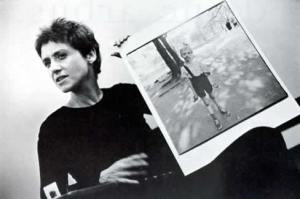
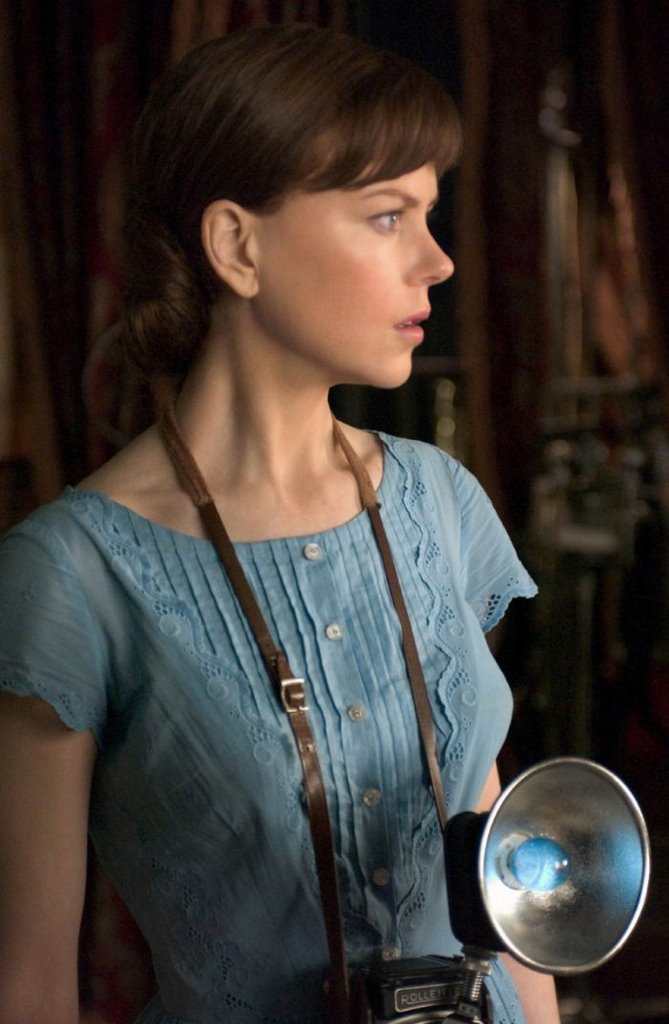
The real Diane Arbus and "Fur"

The subtitle for the new biopic "Fur," starring Nicole Kidman, is "An imaginary portrait of Diane Arbus." Negative reviews have mostly focused on the fact that Arbus' body of work in photography was all about unsentimental realism, though they also note that the submissive approach of Kidman's character to her work is clearly inaccurate and that Kidman herself does not look remotely like Arbus ever did. With so much of the imaginary, there is little of Arbus in the film's portrait.

Arbus, who committed suicide in 1971 at the age of 48, was best known for her photography of society's "freaks": transvestites, giants, dwarfs, nudists, prostitutes, and institutionalized developmentally disabled folks. That's the disability connection. Arbus captured images of disabled people or those with abnormal appearance (which is often associated with disability). Her relationship to the people she photographed has long been a subject of debate. What exactly was her personal fascination with these people about? Was she exploiting her subjects or lovingly documenting their lives? What effect does the power of the photographic gaze have when turned on the powerless or disenfranchised in society? What impact, specifically, does Arbus' stark unsentimental style have on this power of the gaze?

Slate's Dana Stevens' review of "Fur," ironically subtitled "A Lame Take on Photographer Diane Arbus," finds the film stylistically inaccurate to Arbus' life and work:

I'll just note, by way of observation, that the movie's style and mood are the opposite of Arbus' own starkly unsentimental work. Everything in the movie is laboriously pretty. The general atmosphere is Gothic in the style of Twin Peaks: Fetishized freaks are tossed here and there for accent, like throw pillows, while a relentless score by Carter Burwell keeps reminding us how to feel about each moment: Spooked! Tender! Erotically transported!
Similarly, from the NYT:
In “Fur,” Mr. Shainberg’s screenwriter, Erin Cressida Wilson, who also wrote “Secretary,” twists the classic Freudian concept of sexual fetishism, having apparently decided that the best way to explain Arbus’s singular perspective on the world is to transform her into a fetishist. Thus, in this formulation, Lionel, her fuzzy neighbor, becomes a kind of walking, talking fetish, a means — to freedom, creativity, imagination and what Ms. Bosworth calls the dark world — that will usher her into a new realm. This sounds more promising than what materializes on screen largely because Mr. Shainberg and Ms. Wilson have turned Arbus’s life into a neurotic fairy tale.
The fictional fur-covered Lionel introduces Kidman's character to freaks through erotic seduction and controls the submissive film-Arbus' access of them. So, in addition to casting Arbus' subjects as interesting only through fetishism and not for their distinctive humanity, Arbus herself is denied control of her own artistry. Again, Stevens in Slate:
....The script's subtle misogyny, which relegates Arbus' work to the realm of personal liberation, tries to pass itself off as feminism. As the film re-imagines Arbus' career, she begins to take pictures only when given permission to explore her dark side by the wounded Lionel. The problem with this vision of the real Arbus' life isn't that it's myth; it's that it's crap. In the film, art is, in the end, something Arbus makes to please her cool new boyfriend, a kind of mix tape on photographic paper. Even her choice of subject matter to photograph—the castoffs of society, giants, freaks, and amputees—doesn't come from Arbus' own deliberative process. These just happen to be the people in her sweetie's peer group, and after all, they are pretty punk-rock looking, what with the armlessness and all.
From Mia Fineman, also in Slate:
The problem with this scenario as an expression of Arbus' "inner experience" is that it divests her of any artistic agency. Arbus, who in reality was fiercely intelligent and articulate about her chosen art form, comes off as a benighted ingénue—not so much an artist as an adventurous '50s housewife in the process of discovering her bohemian side.
The director defends the film's twisted vision of Arbus in The Washington Post:
"Some of the things people might expect or wish from an Arbus film are so dull to do cinematically," said Shainberg, whose previous film "Secretary" received critical acclaim. "I don't personally want to get in the bathroom with her when she kills herself."
While it's interesting to hear a director say suicide is cinematically dull, what's really dull is the culturally dominant take on what "freaks" are all about and an apparently deliberate mistelling of Arbus' approach to her artistic work. The 2003 catalog of her work, as well as the traveling exhibit to accompany it, are both titled "Revelations," but there's nothing revelatory of assigning society's "freaks" the role of object of fetishism or explaining a woman's professional work as inspired by something other than her own original vision.


The photographs above show Arbus with a poster of one of her photographs and Kidman in the role of Arbus, respectively. Arbus is a dark-haired, dark-eyed New York Jew, while Kidman, of course, is her WASP-y Australian self, though her hair seems to have been dyed for the role.

Friday, October 27, 2006

Michael J. Fox and his political ads

It's been the topic of discussion everywhere this past week. Michael J. Fox's ads for three Democratic candidates aired supporting them because of their support for embryonic stem cell research. Rush Limbaugh accused Fox of faking and exaggerating the symptoms of his Parkinson's disease for emotional effect. Pundits like Keith Olbermann responded to the hoopla.

And bloggers, too, of course.

At Shakespeare's Sister, Zack Handlen writes:

To whit: they’re picking on the handicapped kids.

Seriously, what the fuck is this shit? At this point in most novels, a reader would start rolling his or her eyes at the astonishing absurdities in play. It’s not enough that they’re responsible for thousands of deaths, not enough that they’ve eroded our civil liberties to the point where I feel I should ask for permission every time I use the toilet in my own apartment- they’re now so enthralled in their own pitiless mechanisms that they actually think accusing a sufferer of a major illness of “faking” is a well-considered, do-able strategy. What's next, driving by cemeteries and screaming "POSERS!!!" at the graves?
I'm incredulous too, but the rhetoric on all sides of this discussion feels uncomfortable to me, ambivalent as I am about cures. Handlen (above) follows a tack I wish I wouldn't see. He implies that attacking Fox -- "the handicapped kids" -- is one step away from accusing dead people of faking it. It makes for a dramatic and amusing comeback, but it doesn't say much about society's perception of people who are ill or disabled. Practically dead. Absurdity is often best responded to with absurdity, but this particular comparison isn't original and speaks to the general societal belief that Fox and people like him are, indeed, helpless, hopeless victims.

At Norwegianity, Mark Gisleson says:
It should also be noted that the actor's Michael J. Fox Foundation (MJFF) for Parkinson Research has granted $74 million to Parkinson's researchers over the past ten years.

Fox isn't doing [TV show] Boston Public out of ego, he's doing it to make still more money so he can invest more into finding a cure for those who are cursed with this affliction, even though Fox knows no cure will be developed in time to help him.
In other words, Fox is working hard raising cash and fighting for the freedom of scientific research that doesn't serve his personal interests to the degree critics have claimed. As Gisleson says, most likely it is true that any cure of Parkinson's would come too late for Fox, though I also suspect he maintains some hope for himself. Yet this is an important point to make when others accuse the actor of self-interest -- what an original crime that is!

Amanda Marcotte at Pandagon says:
While no Republicans to date have explained exactly why their right to win elections is so great that it trumps things like noting their slivering evil in public, this premise is behind all arguments against Michael J. Fox’s ad supporting Claire McCaskill because of her stance on stem cell research. I keep seeing variations on this quote from Ann Coulter: “(T)he Democrats hit on an ingenious strategy: They would choose only messengers whom we’re not allowed to reply to.”
Is it wrong to be amused by and love the term "slithering evil" here?

Marcotte expresses the complexity of the situation well, in my opinion. She gives Fox the credit of his own agency while noting the weird problem some Republican critics have with their malevolent tactics being thwarted by the stereotypical view of ill and disabled people as sufferers and victims. Those meanies! Pricked by their consciences finally? Maybe, or by social mores. Too bad it's at the expense of the image of disabled people again.

In an interview with Katie Couric, responding to Limbaugh's comments, Fox calmly states:
Well, first thing, [Limbaugh] used the word victim, and in another occasion, I heard him use the word "pitiable." And I don’t understand, nobody in this position wants pity. We don’t want pity. I could give a damn about Rush Limbaugh’s pity or anyone else’s pity. I'm not a victim.
An excellent, excellent response. I remain uncomfortable with emotional pleas for help, which Fox's ads did have a flavor of, but that's partially my baggage in needing to vehemently reject the victim status given disabled folk. I'm glad Fox spoke (and continues to speak) for himself as well as the cause of stem cell research generally, and I'm satisfied with the way he faced the camera and implicitly said, "This is me. That shock you're feeling at seeing me? That's what this is all about. Don't turn your back on the reality for some moral ideal."

Other crip bloggers on Fox, Limbaugh and the stem cell campaign ads:

Zephyr

Al Masters

Penny Richards

Stephen Kuusisto

Mark Siegel

Monday, October 02, 2006

No Bigger Than a Minute

Tuesday, October 3 -- that's tomorrow! -- on PBS' POV series, Steven Delano's documentary called "No Bigger Than a Minute" will air. (It's on at 10 p.m. here, check locally for the time where you are.)

From the film's synopsis:

"My name is Steven. I am 48 years old and I'm a dwarf." So begins Steven Delano's unusual new documentary, "No Bigger Than a Minute." What follows is neither an academic discourse on the life and times of America's "little people," nor a project in self-affirmation in the face of social discrimination — though the film includes healthy doses of both of these. "No Bigger Than a Minute" has tongue-in-cheek re-enactments, a music score structured after Delano's own mutated DNA sequence, short-statured Hollywood stars such as Peter Dinklage ("The Station Agent") and Meredith Eaton ("Family Law") and musicians, rappers, comedians, novelists, doctors and ordinary folk. Not to mention filmmaker Werner Herzog and an uneasy, and very funny, cameo by Randy Newman, singer-songwriter of the top ten hit, "Short People."

What really stirs this eclectic mix into potent form is Delano's own reluctant "star turn" at the film's center — a film he didn't originally envision appearing in at all. Delano's opening statement is both the culmination of one story, about what he'd learned of dwarfism after 40 years of ignoring it, and the beginning of a new story. It's this new story that thrusts him into his own film to delve into questions of humanity's treatment of difference, tensions between personal and group identities and the future evolution of these contradictions. It's here that Delano faces the most untidy dilemma of all: In the brave new world of genetic engineering, when it is conceivable that dwarfism can be bred out of human populations, is this what we want?

You may have noticed my imaginary boyfriend will be part of the film. He was on Nip/Tuck recently too, and his nanny-character made a little speech saying very disability rightish things. I do believe he could improve any seedy sexist drama he acted on. Any documentary too.

Monday, August 28, 2006

Movie review: The Station Agent

In The Station Agent, Finbar McBride, a dwarf, inherits a rural New Jersey train depot when his only friend dies. He goes to live there and despite wanting to be left alone he has repeated encounters with a few interesting local people. I don't know why I missed hearing about this film when it was released in 2003 (there was even some Oscar buzz), but my newest imaginary boyfriend has been waiting for me all this time. Actually, the whole cast is wonderful. Everyone is funny and fascinating in a quietly hilarious way.

"Dwarf" was the term used in the film, with "midget" once quietly denied. "Little person" never came up, so I'll take my language cues from that unless I hear otherwise. Not that dwarfness (dwarfism?) was exactly the point of the story.

Fin's appearance as a dwarf is quietly present all through the film -- especially whenever he goes out in public -- but it is never presented as an impairment or the source of any crude jokes (visual or otherwise) where he's too short to do something. He's a capable, independent man others seem to be drawn to. His dwarfism is a disability only in how other people see him, and possibly in how a lifetime of this has shaped his character.

In the UK, "disability" is the term those familiar with disability politics use to distinguish societal actions of prejudice and discrimination from the physical or mental conditions -- "impairments" -- that may or may not be actually present. While the ADA attempted to incorporate this idea into American civil rights by, for example, including discrimination against people believed to have AIDS as well as people who actually do, this distinction is not well-recognized anywhere. But Fin is a great presentation of how society disables an individual even when impairments are not apparent by setting them apart with stares and the behavior of strangers.

Peter Dinklage, who plays Fin, has talked about the effect this treatment can have:

Unfortunately, a lot of kids' curiosity is squelched by their parents. Adults don't want to embarrass somebody else, but that perpetuates itself, and it can lead to shutting out anyone who's different than you. Obviously we all do have these societal behaviors that we have to abide by. But, I talk to some people who just don't want to meet my eyes. They think looking at me is rude, because they were brought up not to point or stare or whatever.
Fin's stoic loneliness matches that of the other characters and presents an interesting collage of the many ways people become socially alienated from the world. Disability as a kind of social alienation is only one example. The way Fin and the other misfits he meets form a bond is despite their separateness is the quiet beauty of the film.

Seriously, this movie makes my top ten favorites, and not just because it's probably the first ever well-developed dwarf character on film.