Thursday, November 23, 2006

Going Native: Thanksgiving Day

During grad school I read Oglala Sioux Russell Means' autobiography Where White Men Fear to Tread as part of a three-student special conference course (we also read a book on Latina literary criticism and Connie Panzarino's autobiography) for my public administration degree. We discussed the problems Native Americans have had with the federal government throughout the history of the Bureau of Indian Affairs (BIA), and we talked about how controversial Means is among Indians.

Means admits to his own violent tendencies within his marriages, as I recall, but the thing he said that has stuck with me the most is this: Means claims that generations of Indian children were physically and sexually abused in the boarding schools they were forced to attend. In addition to being stolen from their families, punished if they spoke their native language and many sterilized when they reached sexual maturity, that is. That's how a civilized nation commits genocide.

Image: Photo of a Thanksgiving Day play at an Indian boarding school, ca. 1900. Eight grade-school children are pictured, one seated girl in white pilgrim costume and two boys standing behind her wearing long feathered Indian headdresses. The other five children are seated on the floor with the pilgrim girl and seem to be wearing dark-colored school uniforms. Their facial expressions are sober, or even glum. From the Minnesota Historical Society Visual Database.

Happy holiday to everyone.

Tuesday, November 21, 2006

Going Native: Native women, their rights and violence

A mini-slumgullion of links today on the topic of Native American women's rights and domestic violence:

TiyospayeNow: Fire Thunder Impeachment and the Rights of Women -- Jacqueline Keeler connects the recent impeachment of Cecelia Fire Thunder as Oglala Sioux tribal president to the rights of native women to reproductive freedom and safety from violence:

In addition to impeaching the president, the Oglala Tribal council went one step further than the state of South Dakota -- not only making abortion illegal under any circumstances, except life endangerment, but they made seeking an abortion, or helping someone seek an abortion punishable by banishment from the reservation. So, if a young women is a victim of incest or rape and seeks help from another woman to find an abortion clinic, she and her friend would be banished. Meanwhile, the tribal council resists efforts to deal as stringently with the issue of rape, incest and violence against women, so the men who perpetuate rape are not similarly punished.
Women's Space: Cecelia Fire Thunder, multiple posts -- Heart, who provided the above link to Keeler's eloquent writing, covers the events that led to Fire Thunder's impeachment. Lots of research and excellent links in her multiple entries.

Indian Country: Halting sexual violence
-- A June article shows Fire Thunder's pro-choice efforts extend to addressing tribal problems of sexual violence:
Fire Thunder faces an impeachment hearing on June 29. She plans to fight for her office.

''The abortion issue,'' she said, ''is the key that opens the padlock to sexual deviancy that is occurring on the Pine Ridge reservation.''

Sexual deviancy is what Fire Thunder calls rape and incest: crimes that are rarely adjudicated on the reservation. The epidemic nature of the abuse is noticed in drug and alcohol treatment programs where, Fire Thunder said, 87 percent of women will disclose that they were sexually abused, many as children. The ultimate end of domestic assault is rape, what Fire Thunder calls the ''ultimate subjugation.''

Most women on the Pine Ridge reservation, she said, know someone who has been raped. And the stories pour out as women across the reservation start to talk: stories about children bearing male relatives' babies.

Rape victims in particular, Fire Thunder said, need to have the option to terminate the resulting pregnancy.
NOW: Native American women and violence -- Lisa Bungalia writes about the lack of law enforcement assistance for domestic violence victims in tribal areas:
In addition to domestic abuse, Native American women also experience the highest levels of sexual and domestic abuse of any group. A report from the American Indian Women’s Chemical Health Project found that three-fourths of Native American women have experienced some type of sexual assault in their lives. However, most remain silent due to cultural barriers, a high level of mistrust for white dominated agencies, fear of familial alienation, and a history of inactivity by state and tribal agencies to prosecute crimes committed against them.
Indian Country: Indian women rally against white Christian influence on tribal abortion ban -- At a rally just before the November elections where Fire Thunder failed to win back her presidency:
Fire Thunder and Cook-Lynn said American Indian voters have been influenced by the ideology of the Christian right, which they noted has no place in the political arena.

''This is an attack on women's rights that is ongoing; this is a national issue in Indian country.

''If they can tell you you can't have an abortion, they can tell you you must have one,'' Cook-Lynn said, referring to the practice of a few decades ago of sterilizing American Indian women without their permission.

''This is a result of colonization and Christianity; they don't teach reproductive rights,'' she said.
Domestic violence and tribal protection of indigenous women in the United States -- A lengthy paper written by two women professors at the American Indian Law Certificate program at the University of New Mexico School of Law that includes discussion of the role of Indian feminists in tribal solutions to the problem.

Governmentally coerced sterilization of Native American women
-- A history of eugenics and genocide through depriving Indian women of their reproductive rights.

More links and resources for tribal domestic violence.

Monday, November 20, 2006

Going Native: Disabled veterans

Native Americans have a long and impressive history of serving in the U.S. military. General George Washington noted their service long before they were considered citizens of the United States. Citizenship came in 1924.

The pride and commitment of American Indians in defending their country shows especially in their contributions to fighting WWII:

More than 44,000 American Indians, out of a total Native American population of less than 350,000, served with distinction between 1941 and 1945 in both European and Pacific theaters of war. Native American men and women on the home front also showed an intense desire to serve their country, and were an integral part of the war effort. More than 40,000 Indian people left their reservations to work in ordnance depots, factories, and other war industries. American Indians also invested more than $50 million in war bonds, and contributed generously to the Red Cross and the Army and Navy Relief societies.

Battle-experienced American Indian troops from World War II were joined by newly recruited Native Americans to fight Communist aggression during the Korean conflict. The Native American's strong sense of patriotism and courage emerged once again during the Vietnam era. More than 42,000 Native Americans, more than 90 percent of them volunteers, fought in Vietnam. Native American contributions in United States military combat continued in the 1980s and 1990s as they saw duty in Grenada, Panama, Somalia, and the Persian Gulf.
From a 1996 Department of the Navy resource:
As the 20th century comes to a close, there are nearly 190,000 Native American military veterans. It is well recognized that, historically, Native Americans have the highest record of service per capita when compared to other ethnic groups.
Culture plays a large part in the high numbers of Indians who volunteer for service:
The reasons behind this disproportionate contribution are complex and deeply rooted in traditional American Indian culture. In many respects, Native Americans are no different from others who volunteer for military service. They do, however, have distinctive cultural values which drive them to serve their country. One such value is their proud warrior tradition.

In part, the warrior tradition is a willingness to engage the enemy in battle. This characteristic has been clearly demonstrated by the courageous deeds of Native Americans in combat. However, the warrior tradition is best exemplified by the following qualities said to be inherent to most if not all Native American societies: strength, honor, pride, devotion, and wisdom. These qualities make a perfect fit with military tradition.

Participating in military service, of course, means being numbered among the military wounded and dead. Native American service men and women have been decorated as heroes, and buried as heroes, as well.

U.S. Marine and Pima Indian Ira Hamilton Hayes was one of the six men who raised the American flag in the historic 1945 Iwo Jima photograph. Dubbed a national hero, he was tormented by survivor's guilt:
President Franklin D. Roosevelt called the brave survivors of the flag raising back to the United States to aid a war bond drive. At the White House, President Truman told Ira, "You are an American hero." But Ira didn't feel pride. As he later lamented, "How could I feel like a hero when only five men in my platoon of 45 survived, when only 27 men in my company of 250 managed to escape death or injury?" Later, they were shuttled from one city to another for publicity purposes with questionable sincerity on the part of the American military. Ira Hayes asked to be sent back to the front lines, stating that "sometimes I wish that guy had never made that picture".
Mental stress and alcoholism that resulted from his service in WWII ultimately led to his death by exposure in 1955. He was 33. Johnny Cash wrote a touching song about him:
The Ballad of Ira Hayes

Ira Hayes,
Ira Hayes

CHORUS:
Call him drunken Ira Hayes
He won't answer anymore
Not the whiskey drinkin' Indian
Nor the Marine that went to war

Gather round me people there's a story I would tell
About a brave young Indian you should remember well
From the land of the Pima Indian
A proud and noble band
Who farmed the Phoenix valley in Arizona land

Down the ditches for a thousand years
The water grew Ira's peoples' crops
'Till the white man stole the water rights
And the sparklin' water stopped

Now Ira's folks were hungry
And their land grew crops of weeds
When war came, Ira volunteered
And forgot the white man's greed

CHORUS:
Call him drunken Ira Hayes
He won't answer anymore
Not the whiskey drinkin' Indian
Nor the Marine that went to war

There they battled up Iwo Jima's hill,
Two hundred and fifty men
But only twenty-seven lived to walk back down again

And when the fight was over
And when Old Glory raised
Among the men who held it high
Was the Indian, Ira Hayes

CHORUS:
Call him drunken Ira Hayes
He won't answer anymore
Not the whiskey drinkin' Indian
Nor the Marine that went to war

Ira returned a hero
Celebrated through the land
He was wined and speeched and honored; Everybody shook his hand

But he was just a Pima Indian
No water, no crops, no chance
At home nobody cared what Ira'd done
And when did the Indians dance

CHORUS:
Call him drunken Ira Hayes
He won't answer anymore
Not the whiskey drinkin' Indian
Nor the Marine that went to war

Then Ira started drinkin' hard;
Jail was often his home
They'd let him raise the flag and lower it
like you'd throw a dog a bone!

He died drunk one mornin'
Alone in the land he fought to save
Two inches of water in a lonely ditch
Was a grave for Ira Hayes

CHORUS:
Call him drunken Ira Hayes
He won't answer anymore
Not the whiskey drinkin' Indian
Nor the Marine that went to war

Yeah, call him drunken Ira Hayes
But his land is just as dry
And his ghost is lyin' thirsty
In the ditch where Ira died
In August of 2005, Stories in America blog interviewed Thomas Berry, a Choctaw Indian from Oklahoma who served in Vietnam and the first war in Iraq. Disabled from his military service, Berry has post-traumatic stress disorder, nerve damage and degenerative joint disease in his lower back, so he also has extensive experience with disabled veterans services and the ways that it fails to help the men and women who must rely on it. He started the National Native Americans Veterans Association to try and fill the need of disabled Indian veterans.
When you start talking about mental health and post-traumatic stress disorder, it's hard to gauge how much money you need to put forward to restore that individual. I'll tell you up front, you'll never restore that individual. I still have a lot of problems. I still have nightmares from things I've seen. I expect to have that for the rest of my life. That's not just me. I have an uncle who was in the Navy in Korea who still has nightmares. That was over 50 years ago. Unfortunately, there is no way to prepare a young man or woman for what they might and will face in a combat zone. You just can't do it.
Berry's organization, NNAVA, seeks to help veterans, but also to emotionally support those currently serving in Afghanistan and Iraq:
It's a Native American tradition, where a young man who goes into battle will only wear moccasins. Moccasins were made for him to help him find his way home or find his way into the next life. What we're doing is using that Native tradition. We're making moccasins in the traditional manner. We have a list of over 400 Native Americans serving in Iraq and Afghanistan. Those are the ones we know about. We're wrapping the moccasins in red flannel. Wrapping something in red is what you do for sacred objects. We're sending moccasins to these young Native American troops as a sign of respect for the sacrifice that they're making. It's a way of honoring their service. We've sent 100 pair of moccasins already.
On the difficulty of getting treatment through the VA hospitals, Berry says:
Oklahoma has two VA hospitals. They are totally independent of each other. Protocols for treatment are completely different. There's no standard protocol. Unless you know how each individual hospital works, you're stuck. If I need PTSD treatment, I have to go to Dallas, Texas. At this point, I combine services between Indian Health Clinics and the VA. I believe there's 175 medical centers in the VA system and they are all different. If they standardized, they would save a lot of money.
Though Berry can combine VA services with those offered at the Indian Health Clinics, those services lack adequate federal funding and suffer from the historical neglect and indifference of U.S. policy toward the needs of Native populations.

That neglect and indifference can also be seen in the media representation of Native American service men and women -- or the lack of representation of their work. Lori Piestewa, a Hopi mother and the first American service woman to officially die in combat, was the smaller supplemental media story to the ambush and dramatic recovery of blond, white service woman Jessica Lynch. From the RollingStone article that documents Piestewa's very Hopi contributions to the war:

If Lori had been born a century earlier, the United States government would have considered her an enemy. In the late 1800s, the U.S. Cavalry invaded Hopi lands and decreed that the fields now belonged to white settlers. The Hopi fought back, not with guns or arrows but with nonviolent resistance. (The name Hopi means "peaceful people.") In defiance of the military, Hopi farmers continued to cultivate their lands. The Army arrested nineteen Hopi leaders and sent them to Alcatraz, where some spent as long as two years in solitary.

Piestewa was raised in this Hopi tradition of nonviolence, which emphasizes helping others, starting at home, with one's own family and clan, and extending outward to include the entire community and nation. (Her father, Terry, is Hopi; her mother, Percy, is Hispanic.) As a baby, Lori had her hair washed in a Hopi ceremony and was given the name Kocha-hon-mana: White Bear Girl. "We Hopi were put on this earth to be peaceful," explains Terry, a short, round man with graying hair and a soft voice.

As it is for so many, military service was an opportunity for Piestewa to help her country and provide for her family:

For Native Americans, patriotism and military service are complex, often contentious issues. Some Indians call those who join the military "apples" -- red on the outside, white on the inside. (One T-shirt popular on the reservation bears an old-time photograph of four Indians, rifles at the ready, with the words, homeland security: fighting terrorism since 1492.) But many American Indians still consider this their homeland and have fought to defend it; during World War II, one in eight Indians joined the military.

For Lori, the military was just another way to help others -- starting with her kids and her family. "She wanted to fend for her children," says her mother, Percy. "She was going to build us a house and take care of us. I think she weighed the options that she had. We're not rich enough to send her to college. When you have obstacles in your way, you take what life offers."

The events in Iraq that led to Piestewa's death and Lynch's rescue have been used to help paint our occupation of Iraq as a successful show of force, but Piestewa's family were troubled by the reported tales of Lori's last moments:

Even after Lori was buried, the circumstances surrounding her death remained sketchy. Every rumor was reported as fact, and her family didn't know what to believe. They received reports of Lori fighting to the death, taking many Iraqis with her. "She drew her weapon and fought," Rick Renzi, an Arizona congressman, announced after one Army briefing. "It was her last stand."

It was the kind of image that would make many military families proud: the heroic warrior, guns blazing, fighting to the end. But when Terry Piestewa finally learned the truth about his daughter's death, he was relieved. Lori hadn't fired a shot. All she was doing was driving, trying to get the people she cared about to safety.

"We're very satisfied she went the Hopi way," her father says, smiling. "She didn't inflict any harm on anybody."


AP Photo above shows Jessica Lynch with Lori Piestewa, both in camouflage military uniform.

Sunday, November 19, 2006

Going Native for the week

In honor of the very white, colonial American holiday of Thanksgiving, all posts this week will be about Native Americans (or possibly indigenous populations, generally). I want to see what I can learn about disability issues for American Indians.

Any resources or information anyone has on the topic are welcome here.

Saturday, November 18, 2006

"Web accessibility" for the disabled vs. for everyone

In the comments to my recent post, "Deciding who's legitimate," Zara provides some interesting information of web accessibility and a difference of opinions on it that I think deserves some attention. On the topic of legitimacy itself, Zara says this:

Finally, although there are certainly situations where it may be hard to definitively pin down a particular disability for lack of a clear-cut "diagnosis" and that these people should certainly not be penalised for it, I do think that there does need to be some sort of "line" if only to protect the rights of disabled people and prevent our issues from being highjacked from persons without disabilities. In Web accessibility, there is a very organised and concerted effort to expand what falls into the idea of disability to include everything from search bots to mac users, etc. Personally, I find that this can be a threat to rights that have already been recognised legally or to efforts of having those rights recognised.
Not knowing anything about this threat, I asked Zara to expand. She did that, and included great links on the debate, as well:
In the last year especially, several Web developers and designers, on blogs or mailing lists, have been questioning whether accessibility is a "persons with disabilities" issue or an "access for all" issue. For a summary of both positions, see this article from Accessites. I also suggest you have a look at isolani's series Accessibility in Trouble.

Basically, the reasoning seems to be that since some Web accessibility requirements can indeed present secondary benefits for persons without disabilities (for example, those using less performing material or mobile phone users or those with slow connections or non-native speakers of whatever language, etc.), then it is inadequate, perhaps even discriminatory, to present accessibility primarily as a persons with disabilities issue. And some feel that "selling" accessibility on the basis of benefits to disabled users is too difficult because most people are "uncomfortable" talking about persons with disabilities. So, most notably, search engine optimisation (SEO) is showcased heavily because, did you hear the news ?, Google is blind. In essence, many argue that accessibility is more about availability of resources for everyone. Not withstanding that there already is a concept for what they are referring to, i.e. universality, my major problems with this are :

Web accessibility is a complex field and many developers have a very limited understanding of what the real needs of persons with disabilities are. I do not believe that redefining accessibility to suit business or SEO concerns or suggesting that problems accessing a Web resource with a mobile phone are comparable to a disability will help them to better understand our needs.

Also, I feel that implementing accessibility conditionally to what is convenient for mobile phone users or search bots, etc., particularly in places where it is mandated by law, is not an indication of rights being recognised and upheld. While it is certainly nice that some accessibility requirements can be convenient for other users, I do not believe that you can consider these interests on the same level and I fear there is a real danger of ignoring requirements that are very necessary to certain types of disabilities but that are more demanding and/or present limited advantage in reaching broader audiences or achieving better SEO, etc. Moreover, I fear that with this new definition, there is real danger that rights to access for the disabled not be legally recognised in places where it has yet to be mandated by law because, after all, "accessibility is for everyone" so why would we need to legislate it for a particular population ?

Finally, and this is more a personal statement, I am troubled that this effort is coming from non-disabled people and that very few persons with disabilities are involved in these discussions, whatever their position may be. I feel like once again, things are being "decided" for us on something that is directly related to our rights by people who seem to have a limited understanding of the overall issues relating to disability.
Indeed, nondisabled people deciding for disabled folks what is best is an insidious problem. Just when you think the mechanisms are in place to work toward improvement of access, resistance seems to spring up and disabled people get crowded out of the conversation.

As someone very interesting in making my blog as accessible as possible to all disabled people, it's troubling to find that the information I need to do this may only get more clouded in the future. I want simple, understandable instructions on how to let blind folks, for example, have full access to whatever I decide to discuss -- particularly because as a group they may be much more knowledgeable about some disability issues than I am. I don't want the idea of "web accessibility" to be confused by a flurry of information on conveniences for people who can already access whatever they want.

Saturday Slumgullion #18

Cleaning out my mailbag of interesting links:

The cover story for Time magazine, Oct. 2, 2006: "My Right Hand" by Michael Weisskopf

Chicago city engineers are tasked with checking curb cuts for ADA compliance.

From the AARP Bulletin: "Living by Design: Creative guru Michael Graves turns his attention to improving home health products. This time it’s personal."

Just over a year ago, poet Sharon Olds declined a White House invitation because of the war in Iraq. Read her letter to Mrs. Bush.

The Wall Street Journal writes on Vermont's explorations to alternatives to nursing homes for seniors.

The NYT covers the competition among wheelchair racers in the New York City Marathon.

The article title's question seems stupid to me: "Should severely disabled kids be kept small?" (the answer is no), but MSNBC reports on a six-year-old disabled girl given hormones to keep her physically small and immature.

Quieter cars put blind pedestrians at risk.

In Connecticut's Hartford Courant, 86-year-old Daniel Gross challenges the system that locked him in a nursing home for ten months after being declared unfit by a probate court.

Blinds people around the country voted privately for the first time ever in this past election. Here's one example of an 82-year-old man finally doing it on his own.

ABCNews reports that disabled women with early stage breast cancer are less likely than nondisabled women to be offered the best current treatment options.

LA Times reporter Dan Weikel documents the ADA violations an average wheelchair user finds out-and-about each day.

"Is morbid obesity a disability?"

This past week, the first ever contestant on Who Wants to be a Millionaire? to use a wheelchair instead of the tv show's "hot seat" competed:

Muha was impressed by the tact and sensitivity of “Millionaire” producers, who she says, “asked all of the right questions, and none of the wrong ones.” When asked if Muha wanted to transfer into the hot seat or remain in her wheelchair, Muha asked, “Am I the first person ever on the show in a wheelchair?”

After hearing that in fact she would be the very first, Muha replied, “Then I will definitely stay in my chair!” “Millionaire” built a 3 piece removable ramp for Muha to push herself up to the platform, where she was eye level with host, Meredith Vieira.

The non-profit organization Disability Rights Advocates releases it's ninth annual eagle and turkey awards.

San Diego mayor fires his coordinator for disability services after she advises him the city needs to spend $50 million to avoid federal penalties.

The Sacramento Bee has a series on the price of disability access: Part 1, Part 2, Part 3, Editorial, Letters to the Editor. Good photos, as well.

Democrats in U.S. Senate promise to look closely at Bush's Justice Department Civil Rights Division, says the Boston Globe.

Thursday, November 16, 2006

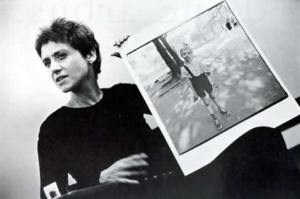
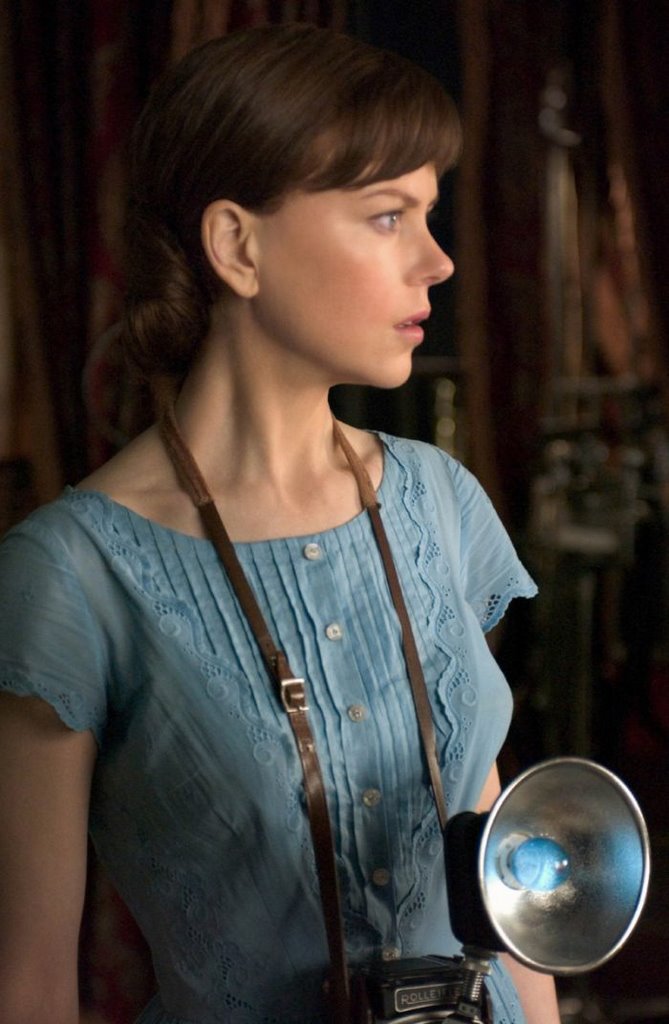
The real Diane Arbus and "Fur"

The subtitle for the new biopic "Fur," starring Nicole Kidman, is "An imaginary portrait of Diane Arbus." Negative reviews have mostly focused on the fact that Arbus' body of work in photography was all about unsentimental realism, though they also note that the submissive approach of Kidman's character to her work is clearly inaccurate and that Kidman herself does not look remotely like Arbus ever did. With so much of the imaginary, there is little of Arbus in the film's portrait.

Arbus, who committed suicide in 1971 at the age of 48, was best known for her photography of society's "freaks": transvestites, giants, dwarfs, nudists, prostitutes, and institutionalized developmentally disabled folks. That's the disability connection. Arbus captured images of disabled people or those with abnormal appearance (which is often associated with disability). Her relationship to the people she photographed has long been a subject of debate. What exactly was her personal fascination with these people about? Was she exploiting her subjects or lovingly documenting their lives? What effect does the power of the photographic gaze have when turned on the powerless or disenfranchised in society? What impact, specifically, does Arbus' stark unsentimental style have on this power of the gaze?

Slate's Dana Stevens' review of "Fur," ironically subtitled "A Lame Take on Photographer Diane Arbus," finds the film stylistically inaccurate to Arbus' life and work:

I'll just note, by way of observation, that the movie's style and mood are the opposite of Arbus' own starkly unsentimental work. Everything in the movie is laboriously pretty. The general atmosphere is Gothic in the style of Twin Peaks: Fetishized freaks are tossed here and there for accent, like throw pillows, while a relentless score by Carter Burwell keeps reminding us how to feel about each moment: Spooked! Tender! Erotically transported!
Similarly, from the NYT:
In “Fur,” Mr. Shainberg’s screenwriter, Erin Cressida Wilson, who also wrote “Secretary,” twists the classic Freudian concept of sexual fetishism, having apparently decided that the best way to explain Arbus’s singular perspective on the world is to transform her into a fetishist. Thus, in this formulation, Lionel, her fuzzy neighbor, becomes a kind of walking, talking fetish, a means — to freedom, creativity, imagination and what Ms. Bosworth calls the dark world — that will usher her into a new realm. This sounds more promising than what materializes on screen largely because Mr. Shainberg and Ms. Wilson have turned Arbus’s life into a neurotic fairy tale.
The fictional fur-covered Lionel introduces Kidman's character to freaks through erotic seduction and controls the submissive film-Arbus' access of them. So, in addition to casting Arbus' subjects as interesting only through fetishism and not for their distinctive humanity, Arbus herself is denied control of her own artistry. Again, Stevens in Slate:
....The script's subtle misogyny, which relegates Arbus' work to the realm of personal liberation, tries to pass itself off as feminism. As the film re-imagines Arbus' career, she begins to take pictures only when given permission to explore her dark side by the wounded Lionel. The problem with this vision of the real Arbus' life isn't that it's myth; it's that it's crap. In the film, art is, in the end, something Arbus makes to please her cool new boyfriend, a kind of mix tape on photographic paper. Even her choice of subject matter to photograph—the castoffs of society, giants, freaks, and amputees—doesn't come from Arbus' own deliberative process. These just happen to be the people in her sweetie's peer group, and after all, they are pretty punk-rock looking, what with the armlessness and all.
From Mia Fineman, also in Slate:
The problem with this scenario as an expression of Arbus' "inner experience" is that it divests her of any artistic agency. Arbus, who in reality was fiercely intelligent and articulate about her chosen art form, comes off as a benighted ingénue—not so much an artist as an adventurous '50s housewife in the process of discovering her bohemian side.
The director defends the film's twisted vision of Arbus in The Washington Post:
"Some of the things people might expect or wish from an Arbus film are so dull to do cinematically," said Shainberg, whose previous film "Secretary" received critical acclaim. "I don't personally want to get in the bathroom with her when she kills herself."
While it's interesting to hear a director say suicide is cinematically dull, what's really dull is the culturally dominant take on what "freaks" are all about and an apparently deliberate mistelling of Arbus' approach to her artistic work. The 2003 catalog of her work, as well as the traveling exhibit to accompany it, are both titled "Revelations," but there's nothing revelatory of assigning society's "freaks" the role of object of fetishism or explaining a woman's professional work as inspired by something other than her own original vision.


The photographs above show Arbus with a poster of one of her photographs and Kidman in the role of Arbus, respectively. Arbus is a dark-haired, dark-eyed New York Jew, while Kidman, of course, is her WASP-y Australian self, though her hair seems to have been dyed for the role.

Updating blogroll

I'm working on adding fresh links to my sidebar and I'm removing some that seem to have been inactive for a long time. Any corrections or comments to this process are welcome.

Wednesday, November 15, 2006

Is disabled accessibility a feminist issue?

The above question is another google search that led here even though I don't have any posts that address this specifically. So, I thought it was about time.

Yes.

The Phoenix, Arizona chapter of NOW (National Organization for Women) used to meet on the inaccessible second floor of a building. I don't know if they do any more. I'd called once, after driving by with my mother and finding that any bus ride to that location to attend a meeting would only end with me hanging out wistfully in the parking lot. The woman I'd mentioned this access problem to on the phone seemed at a loss to address the problem, and either uninterested or so overwhelmed by the issue that she really couldn't be bothered to consider it seriously. And that was the beginning and end of my relationship with Phoenix NOW, though I did help run a Tempe/ASU campus chapter for a year or two.

Wherever women gather to discuss or protest about civil rights and equality, disabled women should be able to be present and to communicate too. This includes blogs, by the way, though not all blogging formats are equally accessible to blind people.

Here are some other reasons the answer will always be "yes."

Wherever women are left to be the primary unpaid caregivers to disabled family members, their work should not be complicated by inaccessibility that isolates them and the loved ones they help or plummets them into abject poverty.

Wherever women with disabilities are poor because of discrimination and lack of access to gainful employment, disability access is a feminist issue.

Wherever primarily immigrant and minority women hold jobs in nursing homes as low-paid nursing assistants, the problems of the disabled will affect these other women and their livelihoods too.

Wherever backbreaking labor-heavy jobs do not provide adequate health care for the physical problems employment causes, disabled accessibility is a feminist issue.

Wherever minority children are more likely to be considered learning disabled or developmentally disabled and denied equal or adequate educations because of this, disabled accessibility is a feminist issue.

Wherever women or minorities are more likely to be considered mentally ill than men or white folks, disabled accessibility to mental health treatment (at the very least) is a feminist issue.

Wherever war rages and survivors are left with permanent disabilities, especially those places where disabled women are determined unmarriageable, unemployable or banished from their own homes, accessibility for the disabled is about women and feminist issues.

Wherever standards of fashion and beauty create inequalities that primarily impact women, accessibility for those whose bodies or minds are deemed abnormal, culturally unfashionable and ugly (or even dangerous) is a feminist issue.

Wherever race, ethnicity, sex or gender differences and variations are treated as bodily abnormalities or flaws to legitimize discrimination, disability is being invoked as a reason for prejudice and denying some people equal consideration as human beings.

Wherever the right to reproductive choices is limited and the politics of choosing includes prejudices about who is and is not worthy to parent, disabled accessibility to medical care, supportive doctors and reproductive freedom is a feminist issue.

Wherever women are, there will be some disabled women. Wherever feminism seeks to include all women in its agenda, the problems of disabled women will be a feminist issue.

Can you think of any more?

Tuesday, November 14, 2006

Call for submissions to Superfest

Someday I am going to Superfest. Yes I am.

SUPERFEST International Disability Film Festival Calls for Submissions:

Your Opportunity to Contribute to Disability Culture

SUPERFEST, the world's longest-running juried international disability film festival, is seeking your entry for submission to our 27th film competition. SUPERFEST is the primary international showcase for cutting-edge films that portray disability culture and experience in all its diverse, complex, and empowering facets.

NEW FINAL ENTRY DEADLINE:
January 15, 2007 (post-marked). Early bird discount if mailed by Jan. 3, 2007. Judging takes place in Spring 2007, and winners will be announced on or around April 1st, 2007. Winners will be screened in the SF Bay Area in June 2007, and all entries will be listed in the festival catalogue. Winners will be asked to provide still production photos and tape copies for publicity purposes.

Eligibility Requirements:
1. Works must be on the subject of disability.
2. Work must have been produced within the last 10 calendar years (since January 1997, for entry in Superfest XXVII in 2007).
3. Entries for Superfest XXVII must be postmarked on or before January 15th, 2007, no exceptions.
4. Must be in the following formats:
a) NTSC VHS Video
b) NTSC DVD (Region I)

Superfest strongly encourages filmmakers to provide captioning and audio description so that films are accessible to the widest possible audience.

Entry fees range from $30 to $90, depending on film length and production budget. This Festival is funded solely by entry fees, small grants, and individual contributions. For detailed information, and to download an entry form, visit: http://www.culturedisabilitytalent.org. You can also e-mail: Superfest@aol.com; phone: 510-845-5576, or send a legal size SASE to: CDT, P.O. Box 1107, Berkeley, CA 94701.

Contact us if you would like to volunteer or make a donation!

Please distribute our Call for Submissions widely. Post on websites, message boards and send to email lists. Thanks for helping us pass the word!

Sunday, November 12, 2006

Freedom

A belated election cheer. Via Cut to the Chase

Kuusisto on Beauty

Go to The Washington Post and read "The Beauty Myth" by Stephen Kuusisto.

Excerpt to entice:

It's not that I'm inured to beauty. Imagine that you're talking to a woman who is sitting across a table from you. When you look at her, all you see is a shimmering cloud of light. On the one hand, you are able to observe people as mystical emanations of divine radiance. On the other hand, you don't know what this woman looks like. So you pour some pinot grigio, and you listen. She's talking about hats: late 19th-century "Gibson girl" hats with the flowers and jaunty brims. She's talking about the first great era of catalogue fashion and a new kind of innocent loveliness. A sighted person might have trouble believing this, but if you're having a nice time in a cloud of light, and you're talking about beauty, the person opposite you is, in fact, beautiful.

Things that crack me up, #14

Sitemeter shows a google search that ended up here: "Why do the disabled wear shoes?"

What do you think? What's your excuse?

Friday, November 10, 2006

Friday gimp blogging

Jay Sennett tagged me for a great art meme recently (and I'll get to that in full, eventually), but due to my mandatory post-hospital "spend down" to maintain disability aid eligibility I've attained two pieces of lovely art. At 38, I'm officially an adult now that I have large (framed) things hanging on my walls that did not come from a rock concert.

I found this first artist's work (above) through Grannie's now-deleted blog. The artist is Alaskan Elise Tomlinson and the piece is called "Lupine Slumber."

This second print (at left) is by Duluth artist Bridget Riversmith and is part of a series based on recurring dreams about a red rabbit. Mine is called "Red Rabbit and the Oddities."

Both hang in my bedroom, which is newly lavender. After all that time spent in hospital beds with such a limited, institutional view, I came home determined to add some color to my world. My hope is that any and all future artwork I hang will be by people I know personally or that I made myself.

For those who need visual descriptions:

The first print is an ultra colorful painting of a woman and her cat curled up and napping in a field of lupine flowers with a lake and mountains in the background. There's an open book near the sleepers and the lupine flowers are exaggeratedly large, resembling inverted purple clumps of grapes. The colors are bold shades of mostly green, blue, purple and yellow, and the style is not realistic. Maybe there's an art expert out there who can tell me if this is impressionistic or like some other particular style. The pic hangs above my bed, which has grass green sheets and a fuschia-print pillow.

The Oddities print is predominantly bold red and shades of pink, with green, teal blue, and bits of orange and yellow. There's a red rabbit in the center with a girl in a dress swinging over him on a trapeze. The oddities are bizarre creatures surrounding them: an orange-ish bird-like dude with a teal cone-shaped hat on the right and a green creature with a long nose that looks like the horn end of three trumpets melded together on the left. There's a pale green fish below and an unhappy bullfrog under the big bird. The top of the pic has some bubbliness that gives motion to the girl swinging on the trapeze. This one hangs above a dresser that has books, a clock, and a little resin Buddha sitting on it. The pic itself is surrounded by a sage green matte and a black wood frame that make the colors dramatic against my lavender wall.

Curious about the books on the dresser? The poetry of Sharon Olds, Song of Solomon by Toni Morrison, two of Judith Butler's books I haven't even cracked (so don't spoil the fun for me), The Time Traveler's Wife by Audrey Niffenberger, Hugh Gallagher's autobiography Black Bird Fly Away, and a novel that takes place in China (which I also have not read).

Thursday, November 09, 2006

Hate crime in New Mexico

COMMUNITY ALERT ABOUT A RECENT HATE CRIME

PLEASE POST WIDELY

An open letter to our communities from “Elliott” (a pseudonym), Kate Loewe (stopsexualviolence@riseup.net), Kathy Ni Keefe (nikeefe@riseup.net), Samuel Lurie (slurie@gmavt.net), and Eli Clare (eclare@gmavt.net):

We are writing to let our communities know about a recent hate crime that occurred in New Mexico. We are writing to break silence, to create resistance to violence and space for healing, and to build support for the survivor. We are writing in hopes that we can take care of each other, undercut the community-wide fear that comes with hate violence, and work toward justice.

Please note that what follows contains some graphic details, which could be triggering. Also, the survivor is a parent of two children, and this information MUST NOT reach them.

On September 2, 2006, Elliott, a cognitively disabled transman, was raped in a barbershop in Albuquerque, New Mexico. The attack started with the barber taunting Elliott, “You’re not a man.” He quickly assessed Elliott as disabled, asking, “Where’s your helper.” Throughout the rape, he called Elliott “freak,” “bitch,” and “retard,” holding a straight razor against Elliott’s throat, and when Elliott tried to run, threatening him with scissors at his eyes.

This brutal sexual assault intertwined transphobia and disability oppression (ableism). First, Elliott was targeted as a transman who is visibly gender variant. And then the perpetrator pegged Elliott as a disabled person, who, because of ableism, was seen as weak, vulnerable, and not believable if he ever tried to speak out. Throughout the attack, the rapist spewed transphobic and ableist hatred and acted with confidence that there would be no repercussions for his violence. This rape was not a random act but part of historic and current patterns of hate violence that target and terrorize both disabled people and trans people.

As we deal, both individually and in community, with the aftermath of this brutality, we urge you to take care of yourselves and each other. And again, we remind you that this information MUST NOT reach Elliott’s children.

We are writing this letter and distributing it widely to end our isolation, to challenge the secrecy and shame that survivors are often forced to live with, and to find community support. We are also writing to raise consciousness about ableist hate violence, which is virtually ignored outside the disability rights movement. In order to end the pervasive violence faced by disabled people—violence ranging from verbal harassment to being forced to live in nursing homes to attacks like the one Elliott just experienced—queer and other progressive activists need to add disability issues to our social justice work. We need to be aware of commonly used ableist language and how these words can quickly escalate to physical and sexual violence. One way you can support Elliot is by educating yourself about disability issues and doing anti-ableist activist work. (See resources below.)

There are many ways—big and small—to support Elliott and his family during this time. Please contact us at stopsexualviolence@riseup.net if you have questions or can help in any way. This email address will also get messages to Elliott.

Ways of supporting Elliott and his family:

For local people in New Mexico:

  • Helping with Elliott’s children (childcare, reading, homework, hanging out)
  • Providing meals
  • Running errands

For everyone:

  • Giving money specifically to support Elliott’s recovery (i.e. rest, acupuncture and therapy)
  • Educating yourself and others about ableism and transphobia
  • Volunteering with anti-violence programs

There are two ways to donate money to Elliott’s Survivor Fund:

1) Go to http://www.tgtrain.org/elliott.html and donate via the PayPal link you’ll find there.

2) Pay via check. Make it out to “R.U.1.2.? Queer Community Center” and send it to R.U.1.2.?/SafeSpace , P.O. Box 5883, Burlington, VT 05402. Please write “Elliott’s Survivor Fund” in the memo section of your check. R.U.1.2.? and its anti-violence project SafeSpace (http://www.safespacevt.org) will pass your donation to Elliott.

Elliott requests the following when people offer support:

  • Respect Elliott’s process.
  • Questions about the police, reporting, and prosecution are not helpful.
  • It’s ok to ask Elliott how he’s doing.
  • Be aware of how you offer support and what you say about the violence Elliott experienced when his children are present.
  • Physical touch may not be helpful. Please ask first.
  • Be yourself.
  • Reach out. Check in. Elliott needs community support.

Let’s take care of each other and resist hate violence in all the ways we know how. Again you can contact us and send messages to Elliott via stopsexualviolence@riseup.net.

In grief, rage, and hope,

Elliott, Kate, Kathy, Samuel, and Eli

Resources about disability issues and ableist violence:

http://www.accessiblesociety.org/casindex.shtml

http://www.raggededgemagazine.com/

http://dawn.thot.net/violence_wwd.html

http://www.notdeadyet.org/docs/articles.html#viol

Resources about trans issues and transphobic violence:

http://www.transgenderlawcenter.org/

http://www.survivorproject.org/

http://www.tgijp.org/

http://www.srlp.org/

http://www.gender.org/remember/#

Go ahead, get shot

It's that time of year to get your flu shot, and possibly help save the life of a person vulnerable to life-threatening illness through the flu. It saves money by preventing work-place absences and medical expenses. It's a community good. And yeah, you could save the life of someone vulnerable that you could otherwise unwittingly infect. Or, someone could save you.

Here are a few facts to encourage you:

You cannot get the flu from the vaccine because the virus in it is dead. (Because the vaccination revs up your immune system you might feel a little tired briefly.)

Every year about 200,000 people in the U.S. are hospitalized because of influenza-related illness.

Each year about 36,000 Americans die from the flu.

Generally, you are contagious with the flu for a day before you show any symptoms of it, and for about five more days after that.

The best way to avoid getting sick is to get the vaccination.

You can still get the vaccine in December or later. Flu season lasts until May.

A flu shot is covered by Medicare.

Disability Carnival #3 is up!

The Disability Carnival #3 on the theme of spirituality is up at David Gaye's blog Growing Up With a Disability today. An excellent collection to check out.

The fourth carnival will be at Diary of a Goldfish on Thursday, November, 23. The deadline for submissions is Monday, Nov. 20.

Tuesday, November 07, 2006

My vote today

I wasn't compelled by election officials to use the electronic voting machine, but I was offered it's use. I declined. And I didn't spend time looking the machine over because someone was busy using it. There was one machine available here for the three town precincts that all vote in the civic center gymnasium. One is enough here for now since voting goes very efficiently and there's clearly order in the process.

It seemed like a high turnout, but they use the space in the gymnasium to set up tables -- mainly for those who register and vote on voting day, which is legal here and really increases voter participation. Minnesota has a very high voter participation rate generally. It didn't feel crowded though, and I was comfortable using a table that was empty instead of waiting for a carrel.

Too many Republican election workers and not enough Democratic workers in my district, as usual, but I have no complaints of how it went for me to vote today. Use the comments here to report on accessibility at your polling site.

Monday, November 06, 2006

Vote anyway

I wonder if I'll be compelled to use an electronic voting machine tomorrow. They haven't existed at my rural precinct before and I've never used one or personally needed more than a low, private carrel to do the deed. Many times (in other places) I've gotten the low but not so private end of a long table, right next to everyone who comes with their ID.

I've ridden public buses to polling places I've never been, unsure of access until I get there. I've sat in long lines to vote in the Arizona sun, when the polling place was too small to hold more than ten to fifteen people in the line, plus the officials and those actually voting. I could barely turn around for running over toes that time. I've gotten up early to get my vote in before class or work. I've wandered strange sidewalks for the accessible entrance. I've gotten dressed on days I otherwise wouldn't have left my home. I've gotten there and realized I didn't have any ID. I've had poll officials make an embarrassing fuss over helping me. I've also succumbed to apathy more than once with local elections or school bond votes that just didn't inspire me.

These are typical issues for disabled people that don't want to vote absentee. I want to be there publically. I want to represent a little bit. I want to see my community. I want to know voting officials are prepared for me. I want them to know they're prepared for me and that they needed to be.

Voting is at the very least a fuss. For many disabled people it's a real adventure or frustration. For people in poor communities, or people of minority groups there's the real possibility that someone will challenge their right to vote. Or they'll be illegally turned away. Or an electronic machine will fail or lack of training of poll workers will make the wait to vote for disabled folk extremely long and tiring.

Maybe an error will require you to go and get a second, clean ballot and the prospect is embarrassing. Maybe the new electronic machine won't do what you want it to do and you feel like giving up. Maybe you doubt the need for your one vote.

Vote anyway. Represent.

Stare the naysayers square in the face and demand the provisional ballot, if necessary. Arrange for back-up transportation, if possible, in case the paratransit lift breaks, or they never come for you. Call someone for a ride. Bring a folding chair so you can bear the wait in line. Bring a snack so you won't get hungry and weak if the wait is extraordinary. Bring a list so you remember your choices and feel competent. Get there any way you can.

Go vote Tuesday.

My déjà vu

Wednesday, November 8, 1989 was a beautiful day in Tempe, AZ, with the sky a cloudless blue. I was up early, waiting at the front desk of Palo Verde East dorm at ASU for my friend Marian's step-father who was coming for all the boxes of Marian's things. He never showed. Around 8 a.m. Deb came instead to tell me personally that Marian was dead.

Deb looked good. Relieved. Over three years before, as the roommate before me, she'd promised to be at Marian's bedside if/when she died, and she'd been tirelessly attendant in the ICU for three weeks. She told me how it ended -- the gradual failure of organs and the mid-night final, peaceful slowing of her heart until it simply stopped. Deb smiled and said it was the most beautiful thing she'd ever seen.

Marian had been comatose for about ten days with a temperature of over 104 degrees. We'd known it was over. I'd spent that Halloween watching the macabre college partying all around me as I tried to absorb the fact that she would not be recovering. Before that, we'd known she would miss the rest of the school semester and a friend and I used nervous energy to pack up her belongings in the dorm.

I'd last seen Marian before the coma came. I'd ridden two buses with a friend, and we arrived as they called a Code Blue for her. A nurse found us shortly and asked for someone strong enough to calm and comfort her after the pain and fear of resuscitation. Nevermind strong, it was now or never, literally. We'd arrived during a rare break for her family and they weren't anywhere to be seen.

Marian's lips were blue around the intubation tube and her neck was not at the angle that juvenile rhumatoid arthritis had stiffened it to in her childhood. They'd probably had to break something in her neck to tilt her head back and insert the breathing tube. She was swollen from massive doses of predisone, and there was fear in her beautiful bloodshot blue eyes.

I held her hand, having no idea then what an incredible physical comfort that can be when frightened and unable to speak. And she was frantic to speak. There was an alphabet board -- another thing I was to learn about eventually too -- for communicating and she trembled as she pointed out the letters successively.

C. O. I. N.

She gestured to me and I ran through obvious possibilities, none of which satisfied her. Yes, C. O. I. N. but not "coin." She meant something more. She was insistent, emphatic. This was important to her to say. We couldn't communicate and I didn't know if her eloquent, brilliant mind was working clearly. She kept spelling out COIN and waving her arms at me while I tried to be calm and reassuring. I quizzed her. She didn't need anything. She wasn't trying to talk about money. This was something she wanted to tell me.

This continued until Deb and her family arrived, rushing in with alarm after hearing she'd stopped breathing. Nurses asked for someone in the crowd to clear the room and I reluctantly volunteered, not knowing then how slow her leaving us would be.

Now, I can imagine exactly how frustrated she must have been with me. I didn't let her "speak." I failed to solve this mystery. The very last thing she tried to say to me I didn't understand. And I left the room with it unresolved. She wasn't conscious after that day.

That was 17 years ago. One year ago I was hospitalized with desperate digestive problems and pneumonia from endless vomiting. Exhaustion on top of disease-weakened abdominal muscles made it difficult to breathe. Locally, they intubated me and sent a camera down my esophagus to see what was up, then I was flown by helicopter to St. Paul and expected surgery.

Heavily drugged, I only remember the helicopter lifting off, then no clarity of memory for about two days. But during that lack of clarity, I had a vivid, unforgettable experience. Through the blur of sedation, I was aware of medical people working over me. As they did various procedures on me, including installing a feeding tube to my stomach and jejunum, I experienced total, extended déjà vu. I anticipated and then experienced -- over and over again -- what was happening.

I don't have any clear memory of what specifically occurred, but I remember being shocked and even alarmed by this mystical déjà vu as it repeated itself relentlessly. It seemed to go on and on, and though I have no doubt the sedatives caused the experience it was still a mystical, even spiritual, event.

I woke up from the drug haze in a private ICU room that, ironically, had a thermostat problem causing a periodic hissing noise that truly sounded like Marian's trusty but dilapidated power wheelchair from long ago. The cycle of hissing-silence-hissing of the thermostat by the door sounded as though Marian was doggedly circling the ICU hallway outside my room.

I spent the next month lying in that bed spelling or writing out messages as Marian had tried to do. And it was then that it occurred to me with a certainty: Coincidence.
Déjà vu.